

How to Find AHA Certification Near Me Fast
Obtaining an AHA certification from an AHA Training Site near you is easy — here’s the path:
| Step | What to Do |
|---|---|
| 1 | Determine which course you need: BLS, ACLS, PALS, or Heartsaver (CPR, CPR First Aid, or Pediatric CPR First Aid) |
| 2 | Use the AHA Atlas Class Finder to find an AHA class or Training Site near you |
| 3 | Enroll in the class, usually through the Training Site’s website |
| 4 | Complete any prerequisites, such as online modules for Blended Learning courses |
| 5 | Attend the class, or complete the in-person Skills Session if you chose Blended Learning |
| 6 | Receive your AHA eCard by email after your instructor processes your certification |
Every year, thousands of nurses, EMTs, teachers, childcare workers, and everyday people search for a nearby AHA certification course — usually because a deadline is looming or an employer is asking.
Here is the uncomfortable truth: cardiac arrest can happen anywhere, at any time. According to the American Heart Association, immediate CPR can double or even triple a person’s chance of survival. That’s not a small difference. It’s often the difference between life and death.
The 2025 AHA Guidelines reflect the latest resuscitation science, and any reputable AHA Training Center should be teaching to those standards now. The AHA updates its guidelines every 5 years to keep training aligned with current evidence.
Whether you’re a healthcare professional keeping your BLS card current, a teacher meeting a school district requirement, or a parent who just wants to be prepared, finding the right AHA-certified course near you is the first step. This guide walks you through everything you need to know.
Why Choose an AHA Certification?
When you start looking for a “CPR class,” you’ll notice there are a lot of different organizations offering cards. However, the American Heart Association (AHA) is widely considered the “gold standard.” Why? Because the AHA is a world leader in resuscitation science. They don’t just teach the rules; they help write them.
Choosing an AHA-backed CPR certification means you are learning evidence-based techniques. These are not just best practices in theory. They are skills grounded in scientific research and designed to improve survival outcomes when every second matters.
Beyond the science, there’s the practical side: national recognition. Most hospitals, dental offices, and emergency medical services in the San Francisco Bay Area and across the country require AHA certification specifically. If you’re a nurse in Santa Rosa or an EMT in San Rafael, your employer likely won’t accept anything else for workplace compliance.
Finding the Right AHA Certification for Your Career
Your career path usually dictates which course you need. We often see students who are confused about the alphabet soup of certifications. Here’s a quick breakdown:
- Healthcare Providers: If you are a doctor, nurse, dentist, pharmacist, or other clinical professional, you will often need BLS certification as your baseline credential. For advanced or specialized care roles, you may also need ACLS certification for adult cardiac emergencies or PALS certification if you treat infants and children.
- Nursing and EMT Students: Many training programs require a current BLS Provider card before clinicals or field experience begin, so getting certified early can help you stay on track.
- General Workplace/Public: If you work in a school, gym, office, or job site, a Heartsaver-level CPR class or CPR First Aid class may be the best fit for workplace safety and compliance.
While you might see listings for AHA CPR AED certification classes in other regions, if you are located in Northern California, you want a local center that understands the specific requirements of our regional healthcare systems and school districts. Professional growth often depends on having the right credentials at the right time.
Main Types of AHA Courses and Who Needs Them
Not all “CPR” is the same. The AHA categorizes courses based on the level of care provided and the setting where it will be used.
| Course Name | Best For | Key Skills Taught |
|---|---|---|
| BLS (Basic Life Support) | Doctors, nurses, EMTs, dentists, medical students | High-quality CPR, AED, team resuscitation |
| ACLS (Advanced Cardiovascular Life Support) | ER/ICU staff, Paramedics | Rhythm recognition, intubation, pharmacology |
| PALS (Pediatric Advanced Life Support) | Pediatricians, Pediatric nurses, Respiratory Therapists | Pediatric assessment, advanced airway, shock |
| Heartsaver CPR AED | Teachers, coaches, security, general public | CPR, AED, choking for adults, children, infants |
| Heartsaver First Aid | Construction, industrial and manufacturing facilities, laboratories, recreational organizations, OSHA compliance | Heart attack, stroke, wound care, allergic reactions, bleeding control, seizures, drowning, environmental emergencies |
| Heartsaver Pediatric CPR First Aid | Licensed childcare providers | CPR, AED, choking for adults, children, infants. Additional course topics are included to meet CA state and EMSA regulations for CPR First Aid training for licensed childcare providers. |
If you are working in high-acuity areas, you’ll likely need ACLS Certification to manage cardiac arrest and stroke. For those focusing on our youngest patients, PALS Certification is the standard for pediatric care.
For non-healthcare professionals, the Heartsaver curriculum is the way to go. This is the certification often required for workplace safety and similar programs nationwide. In our local area, we find that many childcare providers specifically need the Pediatric First Aid CPR AED version to meet state licensing requirements.
How to Locate and Enroll in an AHA Certification Course
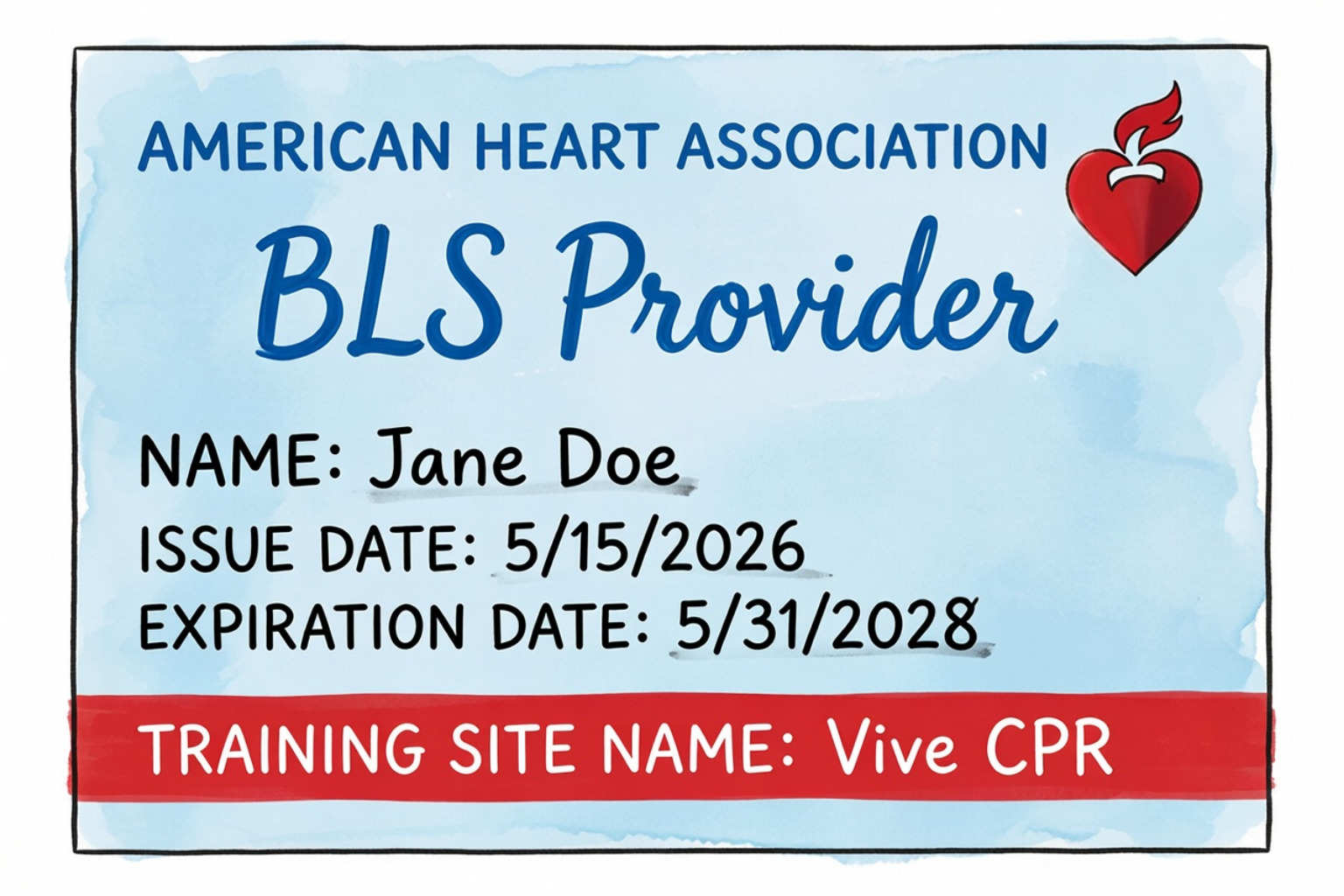
Finding an AHA certification near you shouldn’t be a headache. The most reliable way is to use the official AHA Class Locator or look for authorized providers like us.
When you are ready to enroll, you’ll need to choose the class format that fits how you learn best. At Vive CPR, we offer both instructor-led and Blended Learning options. With Blended Learning, you complete the cognitive portion online at your own pace, then come to our Rohnert Park classroom for an in-person Skills Session.
For example, HeartCode BLS is the Blended Learning version of the BLS course. It’s a strong fit for busy professionals who want more flexibility than a traditional 3-hour class. You complete the online portion first, then come in for about 1 hour of hands-on practice with our AHA instructor.
A quick note on scheduling: Because classes can fill up, finding a same-day option may be difficult. We do not offer walk-in classes, and enrollment is required in advance for all our certification classes. Pre-registration helps us keep sessions organized and make sure each student gets proper hands-on instruction.
How to Schedule Group AHA Certification
If you manage a dental office in Napa or a school in Petaluma, you know that keeping everyone’s certification current is a logistical puzzle. This is where onsite CPR training becomes a lifesaver.
We can bring the classroom to you. Onsite training is a smart fit for:
- Corporate Compliance: Meet OSHA-related training needs without sending employees offsite.
- School Safety: Keep teachers, coaches, and staff trained together with the same expectations.
- Team Coordination: Practice as a group in the real setting where an emergency could happen.
- One Certification Timeline: Train everyone at once so your team stays on the same certification schedule and renewal cycle.
Whether you need a group BLS class for a small clinical team or a CPR class for 50 teachers, group training streamlines the process and ensures your organization stays compliant and safe.
Skills and Requirements for AHA Certification
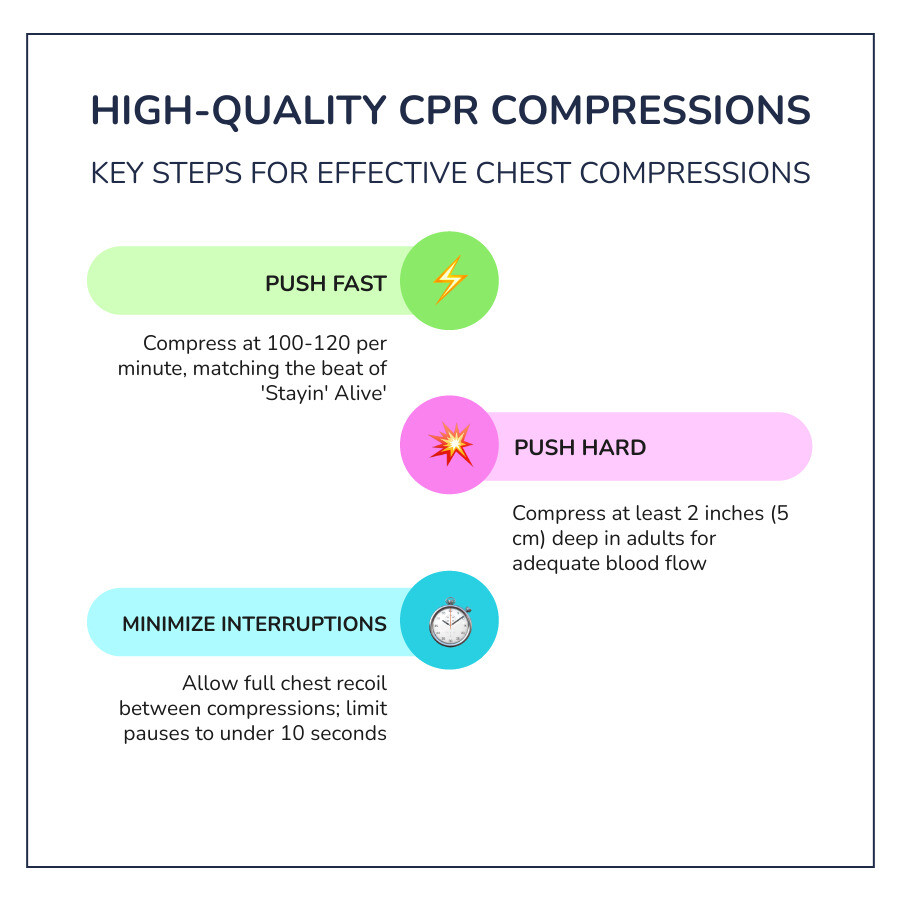
What actually happens during a class? It’s not just watching videos. To earn your card, you have to demonstrate that you can actually perform the skills. The 2025 updates place a heavy emphasis on “high-quality CPR.” This means:
- Compression Depth: Pushing down at least 2 inches for adults.
- Compression Rate: Pushing at a speed of 100 to 120 beats per minute (think “Stayin’ Alive”).
- Full Recoil: Letting the chest come all the way back up between pushes.
- Minimizing Interruptions: Keeping your hands on the chest as much as possible.
You will also master AED operation. An Automated External Defibrillator is incredibly easy to use, but it can be intimidating the first time you open it. We make sure you’re comfortable with the prompts and pad placement.
For advanced students, HeartCode ACLS and HeartCode PALS involve more complex scenarios, including team dynamics. In a real resuscitation, communication is just as important as the clinical skills. Knowing who is leading the code, who is timing, and who is providing medications can prevent the “chaos” that sometimes happens in emergencies.
At Vive CPR, we don’t use voice-assisted manikins (VAMs) where you quickly perform skills in a room with a computerized manikin and no instuctor. We believe there is no substitute for a real human instructor — someone who has actually performed these skills in the field — giving you personalized feedback and answering all your questions.
Frequently Asked Questions About AHA Certification Near Me
When people look for BLS, CPR, and First Aid certification courses in Rohnert Park and the SF Bay Area, they usually have a few common questions. Let’s tackle them here.
How long is my AHA card valid?
AHA certifications are valid for two years, but not always to the exact day. In practice, AHA cards expire at the end of the month shown on the card. For example, if you complete your class on April 15, 2026, your cerrtification would remain valid through April 30, 2028. To avoid any lapse in your credentials, it is smart to renew about a month before expiration.
Can I renew an expired certification?
Yes. In many cases, if your certification has expired, you can still renew by taking the same course used for initial certification. However, you may not be able to enroll in a renewal class, as often times those classes require a current, non-expired certification. Blended Learning classes are suitable for both first-time students and renewals, as they do not require a current certification.
Are there online-only AHA certifications?
This is a big one. No. The AHA does not authorize any 100% online-only certification that results in an official certification. To get a valid AHA certification, you must perform a hands-on skills check. If a website promises you a card without ever touching a manikin, it is likely not an official AHA certification and will probably be rejected by your employer.
How much do courses cost?
Prices vary depending on the level of the course. Generally, Heartsaver courses for the public are the most affordable, followed by BLS, while advanced courses like ACLS and PALS are more expensive due to the complexity of the material and the equipment required.
Conclusion
Finding an AHA certification near you should be simple, not stressful. At Vive CPR, we make the process easy for students and professionals who need trusted training close to home. As an American Heart Association Training Site, we proudly serve Santa Rosa, Rohnert Park, and surrounding communities across Sonoma, Napa, and Marin counties.
Our instructors aren’t just reading from a manual; they are professional first responders who bring real-world experience to every class. Whether you are a parent looking for infant safety tips or a seasoned nurse needing to renew your ACLS, we provide a warm, stress-free environment where you can truly master these life-saving skills.
Ready to join the thousands of students who have trained with us? Don’t wait until your card expires or an emergency happens. Get your CPR certification today and gain the confidence to act when it matters most.
