

Evaluating CPR Classes in Rohnert Park, CA
CPR classes in Rohnert Park CA are easy to find — but finding the right one takes a little know-how.
Here’s a quick overview of what’s available locally:
| What You Need | Best Course Option | Who It’s For |
|---|---|---|
| Job or hospital requirement | BLS | All healthcare professionals including physicians, nurses, RNAs, dentists, dental staff, EMTs, MAs |
| Advanced clinical credentials | ACLS, PALS, or NRP | Physicians, RNs, paramedics, L&D Nurses, NICU nurses |
| General emergency readiness | CPR First Aid | Teachers, parents, office staff, trade workers |
| Childcare licensing (Title 22) | Pediatric CPR First Aid | Daycare, preschool, and childcare workers |
| Group or workplace training | Onsite group class | Businesses, schools, clinics |
Rohnert Park sits right in the middle of Sonoma County’s healthcare corridor. Hospitals, clinics, schools, and childcare centers in the area all require staff to hold current CPR certification — and most require it to be from the American Heart Association (AHA).
The stakes are real. The American Heart Association reports that immediate CPR can double or triple survival chances, yet only about 40% of adults who suffer an out-of-hospital cardiac arrest receive bystander CPR.
Training matters. So does choosing the right class.
Below are five practical tips to help you pick the best CPR course for your needs without wasting time or money.
1. Choose the Right Certification for Your Career or Personal Goals
Before you sign up for any training, you must determine exactly which certification you need. Registering for the wrong class is one of the most common mistakes students make. It can result in spent resources and a certificate your employer or school cannot accept.
In Sonoma County, major employer systems, clinical programs, and state licensing boards hold strict guidelines. To make sure you get the proper credentials, read our detailed local guide to AHA CPR in Sonoma County.
Generally, certifications fall into two categories: professional healthcare-grade courses and general public safety courses. Choosing between them depends entirely on your profession, school prerequisites, or personal safety goals.
BLS vs. General CPR Classes in Rohnert Park CA
The most frequent point of confusion is the difference between Basic Life Support (BLS) and general CPR classes.
- Basic Life Support (BLS): This is the standard, professional-grade emergency credential designed specifically for healthcare providers, clinical students, and public safety personnel. If you are a nurse, physician, dentist, dental hygienist, EMT, paramedic, physical therapist, or a student preparing for clinical rotations, you must take BLS. The curriculum focuses on high-quality multi-rescuer CPR, team dynamics, advanced airway management, bag-valve-mask (BVM) ventilations, and the use of Automated External Defibrillators (AEDs) for adults, children, and infants. To secure your spot, you can register for our BLS certification class.
- CPR First Aid: This course is designed for non-clinical professionals and community members. If you work in an office, school, gym, construction site, or simply want to know how to protect your family in an emergency, layperson CPR is the correct choice. It covers basic single-rescuer adult, child, and infant CPR, AED operation, and choking relief. To learn more about this course, visit our CPR First Aid certification class page.
We highly recommend confirming your employer’s preferred certifying agency before booking your class to ensure it meets all local requirements.
Advanced Certifications: ACLS, PALS, and NRP
For healthcare professionals working in critical care, emergency medicine, anesthesia, or advanced clinical roles, basic CPR is not enough. You will need advanced cardiac life support credentials:
- ACLS (Advanced Cardiovascular Life Support): This course focuses on urgent clinical interventions for cardiopulmonary arrest, acute arrhythmia, stroke, and acute coronary syndromes. It requires an active understanding of ECG rhythm interpretation, airway management, and emergency pharmacology. If you need this level of training, read our specialized resource, ACLS Class Rohnert Park: Your Path to Professional Certification, or enroll directly in our comprehensive ACLS certification course.
- PALS (Pediatric Advanced Life Support): Designed for clinicians who care for critically ill pediatric patients, PALS teaches a systematic approach to pediatric assessment, resuscitation, and post-cardiac arrest care. You can learn more on our PALS certification page.
- NRP (Neonatal Resuscitation Program): Built for healthcare professionals who support newborns during and immediately after delivery, NRP focuses on neonatal assessment, ventilation, resuscitation steps, and team-based response. Learn more or register through our NRP certification page.
2. Prioritize Hands-On, Instructor-Led Training Over Online-Only Shortcuts
In a world of digital convenience, it can be tempting to buy a cheap, 100% online CPR certificate. However, this is a major pitfall.
BEWARE: Online-only CPR certifications are almost never accepted by clinical employers, state licensing boards, or schools.
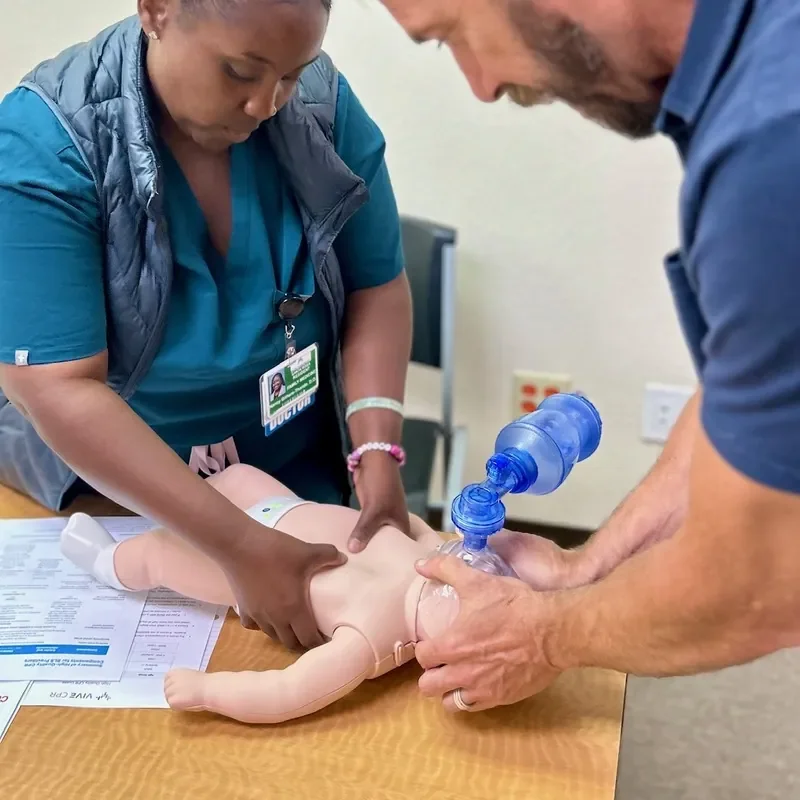
The reason is simple: you cannot learn physical muscle memory by clicking buttons on a screen. If you have never compressed a physical chest to a depth of two inches, or physically practiced the steps in a realistic emergency scenario, you are not prepared to save a life in the real world.
At Vive CPR, we believe in the power of real-world practice. We do not offer online-only or voice-assisted manikin (VAM) training. Every single course we provide includes an instructor-led, hands-on component with high-quality feedback equipment and expert guidance.
To understand why hands-on training is so vital for real emergencies, check out Where is the Best CPR Certification Class Near Me?.
Why Blended Learning Works Best for Busy Schedules
If you want the convenience of online learning without sacrificing the quality of hands-on practice, The AHA Blended Learning class format is the perfect compromise.
Blended Learning divides your training into two simple parts:
- Online Coursework: You complete the cognitive portion of your training online at your own pace. This covers the lectures, interactive scenarios, and written exams. It can be completed on your computer, tablet, or phone whenever it fits into your schedule.
- In-Person Skills Session: Once your online portion is complete, you visit our comfortable Rohnert Park classroom for a short, highly focused, hands-on Skills Session. This is where you practice your physical skills, receive corrective feedback from our expert instructors, and demonstrate your competency.
This format saves you hours of classroom time while still earning you an official, fully compliant AHA certification card. To get started with this flexible option, you can enroll in a Blended Learning BLS class today or learn more about the benefits of Blended Learning.
3. Understand Local Employer and School Requirements in Sonoma County
Sonoma County is home to a robust network of healthcare systems, educational institutions, and community organizations. Each of these entities has specific compliance guidelines that you must meet to work, volunteer, or complete clinical rotations.
Major healthcare employers in our region include:
- Providence Santa Rosa Memorial Hospital
- Sutter Santa Rosa Regional Hospital
- Petaluma Valley Hospital
- Kaiser Permanente Santa Rosa Medical Center
These hospitals require their clinical staff to hold official American Heart Association (AHA) certifications. While some organizations accept certifications from other bodies, the AHA remains the gold standard for clinical credentialing. You can learn more about AHA training standards through the American Heart Association CPR and ECC training resources.
If you are a student at Sonoma State University (SSU), especially in the nursing, pre-medical, or kinesiology programs, you must secure your official AHA BLS card before your clinical placements begin. To find the right AHA-approved class near campus, use our AHA Certification Near Me: A Quick Locator Guide.
Meeting Title 22 Childcare Requirements with CPR Classes in Rohnert Park CA
If you work in a preschool, daycare, or licensed childcare facility in Sonoma County, your certification requirements are guided by California State Title 22 regulations.
Licensed family child care homes and childcare center staff must complete Pediatric CPR First Aid training officially approved by the Emergency Medical Services Authority (EMSA). These courses must include hands-on skills assessment and cover required pediatric emergency topics.
Our Pediatric CPR First Aid class meet these strict state licensing requirements. You can view our course calendar and register directly on our Pediatric CPR First Aid certificaton class page.
4. Plan Ahead for CPR Classes in Rohnert Park CA to Avoid the Last-Minute Rush
One of the most important rules of emergency safety training is to plan ahead.
Please note: We generally do not offer same-day classes or walk-in classes.
Because we prioritize high-quality, hands-on instruction with proper student-to-manikin ratios, our classes must be scheduled and booked in advance. If your certification is expiring tomorrow, waiting until the last minute can put you in a tough position with your employer or school.
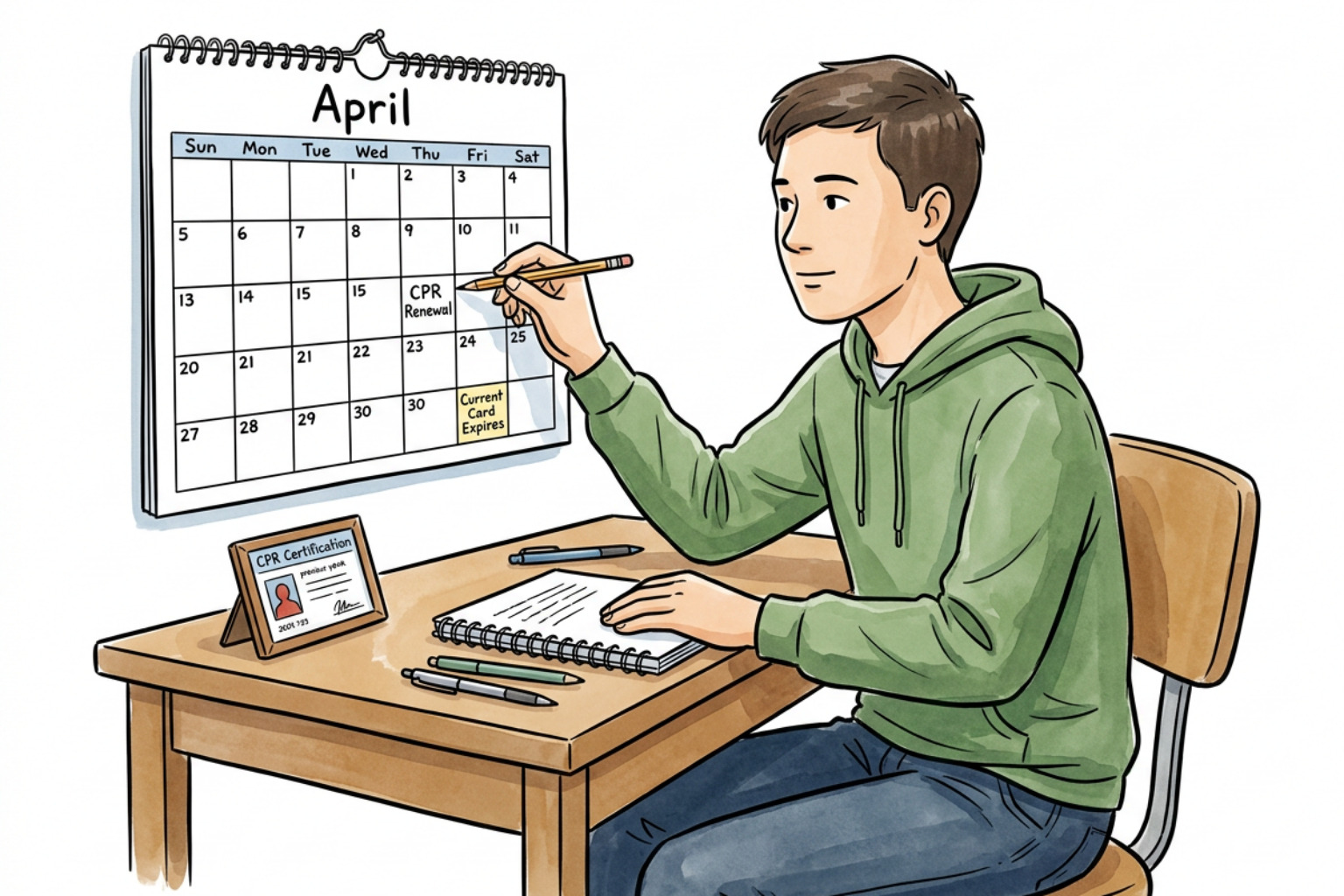
Your AHA certification is valid for two years from the date of issue. We recommend scheduling your renewal class at least 30 days before your current card expires. This gives you plenty of time to find a date and time that fits your schedule without risking a lapse in your credentials. When you enroll in one of our certification classes, we also send you a handy reminder about two years later, before your certification expires.
To secure your upcoming training date, you can enroll in a class through our secure online portal.
How to Handle Expiring Certifications
If your card is nearing its expiration date, don’t panic. The renewal process is straightforward:
- Select the appropriate course on our website.
- Choose between our in-person classroom courses or our flexible Blended Learning format.
- Book your session in advance to reserve your seat and have time to complete any prerequisites.
- Complete your training and receive your digital certificaton card, which is typically issued on the very same day you complete the class.
Planning ahead keeps you compliant and ensures you are always ready to respond to a life-threatening crisis. To renew your general safety credentials, visit our page to enroll in a class.
5. Look for Flexible Group and Onsite Training Options
If you are a business owner, office manager, school administrator, or clinical director, coordinating individual training for your entire team can be a logistical headache. That is why we offer flexible group and onsite training options.
We can bring our professional instructors, high-quality feedback manikins, training AEDs, and first aid supplies directly to your business, school, or clinic. This allows your team to train together in their actual working environment, which improves team coordination and emergency preparedness.
Here is a quick comparison of the training formats we offer to help you decide which is best for your group:
| Training Format | Where It Takes Place | Best For | Key Benefit |
|---|---|---|---|
| Traditional Classroom | Our Rohnert Park classroom | Individuals and small groups | Fully guided by a live instructor from start to finish |
| Blended Learning | Your location (online course) + our Rohnert Park classroom (in-person Skills Session) | Busy professionals | Minimizes classroom time; highly flexible scheduling |
| Onsite Group Training | Your business, home, or school | Teams, clinics, corporate offices | We bring all the equipment to you at your convenience; training is customized to your workplace |
Our onsite classes are taught by professional first responders such as EMTs, paramedics, and firefighters, who bring real-world emergency experience to your team. We can also customize our courses to include specialized training, such as Infant CPR and safey for new parents, Bloodborne Pathogens training, STOP THE BLEED®, or Harm Reduction (opioid overdose and Narcan training).
Frequently Asked Questions About Rohnert Park CPR Training
How long do CPR and BLS certification classes take?
The duration of your class depends on the specific class and class format you choose. A traditional, fully in-person classroom BLS certification course typically takes about 3 hours while a CPR class takes about 2.5 hours.
If you choose our Blended Learning class format, the online coursework takes approximately 1 to 2 hours for BLS or 1 to 1.5 hours for CPR, and the subsequent in-person Skills Session takes about 1 hour for either BLS or CPR.
Do local hospitals accept online-only CPR certifications?
No. Local hospital systems in Sonoma County, including Providence, Sutter, and Kaiser, do not accept 100% online certifications. They require a live, hands-on skills verification with a certified instructor. Our Blended Learning courses are fully accepted because they include this vital hands-on testing component.
How do I schedule a group CPR class for my business?
Scheduling a private group class is simple. Contact us with your estimated group size, location, and the type of certification your team needs. We’ll be in touch right away with more information and a quote. We’ll schedule the class at your convenience, and our mobile instructors will handle the rest, bringing all necessary training equipment directly to your location.
Conclusion
When an emergency strikes, there is no substitute for quality training. Choosing the right provider for your cpr classes in Rohnert Park, CA ensures that you walk away with both a valid, employer-accepted credential and the real-world confidence to act when it matters most.
At Vive CPR, we are proud to serve Rohnert Park, Santa Rosa, Petaluma, and the wider SF Bay Area. Our modern classroom is located conveniently off the 101 Freeway in Rohnert Park, offering a clean, comfortable, and professional environment with plenty of free parking.
With our team of professional first-responder instructors, we make sure your class is engaging, efficient, and deeply practical.
Whether you are an individual needing to renew your clinical credentials or a business looking to protect your staff, we are here to help. Contact Vive CPR to learn more about our onsite group training or enroll yourself today in a certification class.
