

Why CPR Certification in Lake County Could Save a Life Near You
CPR certification for Lake County residents is more accessible than many people realize — and the stakes for getting trained couldn’t be higher.
Here’s a quick snapshot of your main options:
| Provider Type | Course Options | Format | Approx. Cost |
|---|---|---|---|
| AHA Training Sites | BLS, Heartsaver CPR/AED, First Aid | In-person or Blended Learning, with certification. | Varies by provider |
| Local Fire Districts | Hands-only CPR or Heartsaver CPR/AED | In-person. May not come with certification. | Free or \~$50 |
| Park Districts | CPR/AED | In-person | \~$51-$56 |
| Community/County Programs | CPR/AED, First Aid | In-person | \~$25-$65 |
More than 500,000 cardiac arrests happen every year in the United States. The uncomfortable truth? Most happen before anyone reaches a hospital. Bystander CPR — started immediately — can double or even triple a person’s chance of survival.
That’s not a small difference. That’s the difference between life and death.
Whether you’re a nurse keeping your hospital credentials current, a childcare worker meeting licensing requirements, or a parent who just wants to feel prepared — getting certified is one of the most practical things you can do. This guide walks you through every option available in Lake County so you can find the right class, at the right time, for the right price.
Choosing the Right CPR Certification Lake County Program
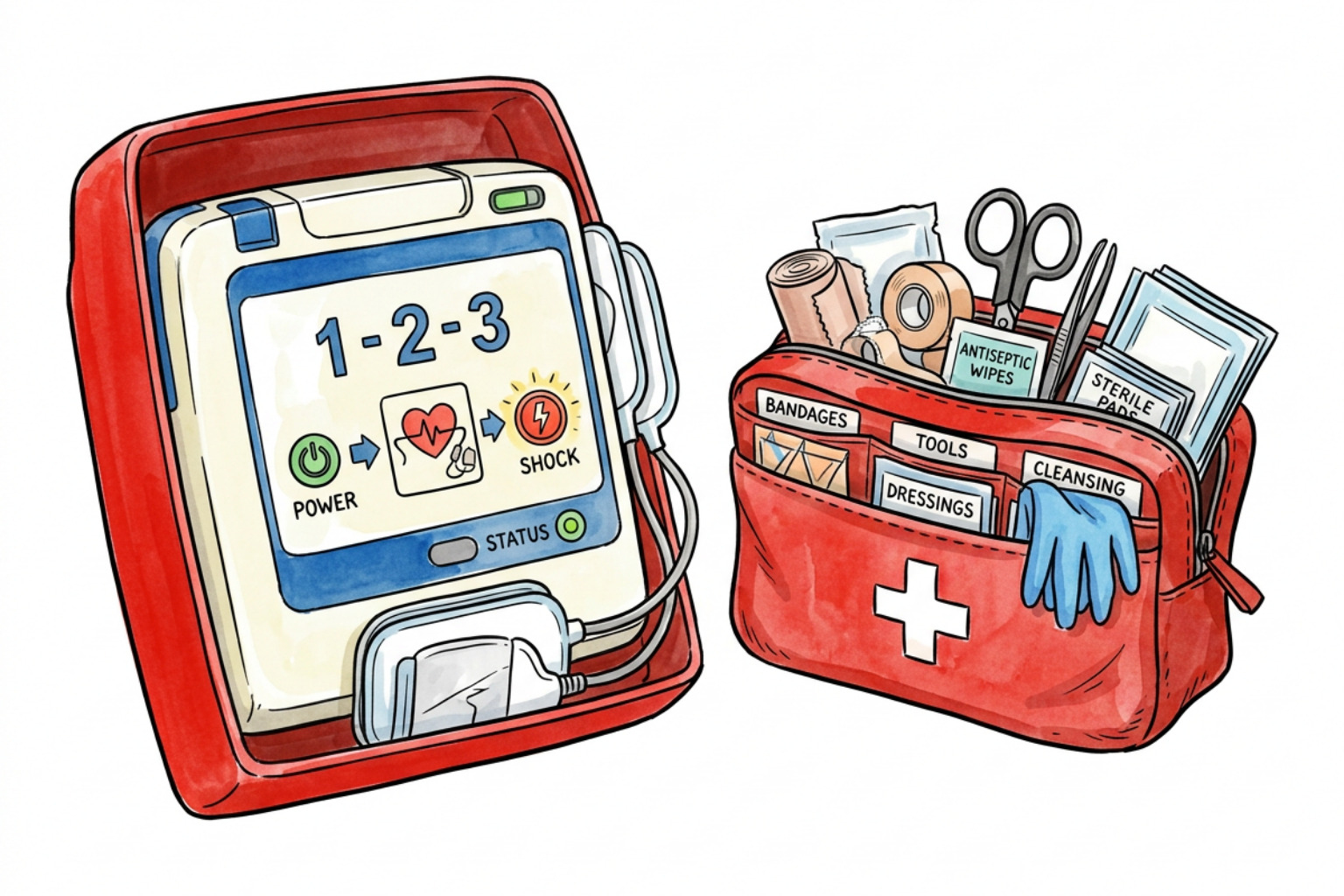
When looking for CPR certification Lake County classes, the sheer number of acronyms can make your head spin. You will see terms like BLS, Heartsaver, AED, Pediatric First Aid, ACLS, and PALS. Choosing the wrong course can lead to wasted time and money if your employer or licensing board rejects your card.
Before you register, always confirm the exact requirements of your school, employer, or state licensing board. To help you make sense of it all, let’s break down the primary pathways. If you are looking for medical-level life support, you may want a BLS certification class. If you are a general worker, teacher, or community member, you will likely need a CPR First Aid certification class.
BLS vs. Heartsaver CPR Certification Lake County Options
The American Heart Association (AHA) categorizes its life support classes into two main paths based on your profession and level of responsibility.
To help you find the right location and training type, you can refer to our AHA Certification Near Me Guide. Below is a quick comparison of the two primary AHA courses:
| Feature | BLS (Basic Life Support) | Heartsaver First Aid CPR AED |
|---|---|---|
| Target Audience | Healthcare professionals (Nurses, Doctors, EMTs, Dentists, Clinical Students) | General public, teachers, coaches, industrial workers, construction teams |
| Key Focus Areas | High-quality CPR, multi-rescuer team dynamics, bag-valve-mask (BVM) ventilation, advanced airway support | Single-rescuer CPR, basic AED operation, choking relief, basic first aid |
| Pediatric Component | Covers adults, children, and infants | Optional or module-specific (mandatory for childcare) |
| Skills Exam | Hands-on skills testing + exam (written exam in Instructor-Led BLS, online adaptive testing for Blended Learning BLS) | Hands-on skills testing |
Pediatric CPR First Aid and EMSA Requirements
If you work in a licensed childcare center, preschool, or daycare facility in California, standard CPR classes will not cut it. The California Emergency Medical Services Authority (EMSA) regulates safety training for childcare providers.
To meet California EMSA and childcare-licensing requirements, your Pediatric CPR First Aid class must be taken in the instructor-led, fully in-person format. The AHA Blended Learning format (online coursework followed by a skills session) does not satisfy California EMSA requirements for childcare providers.
If you need to meet these strict state guidelines, make sure you choose an completely in-person, classroom-based course. You can learn more about finding these flexible, compliant sessions by reading our guide on Where to Enroll in a Basic First Aid Course Today.
Local Training Providers and Registration in Northern California
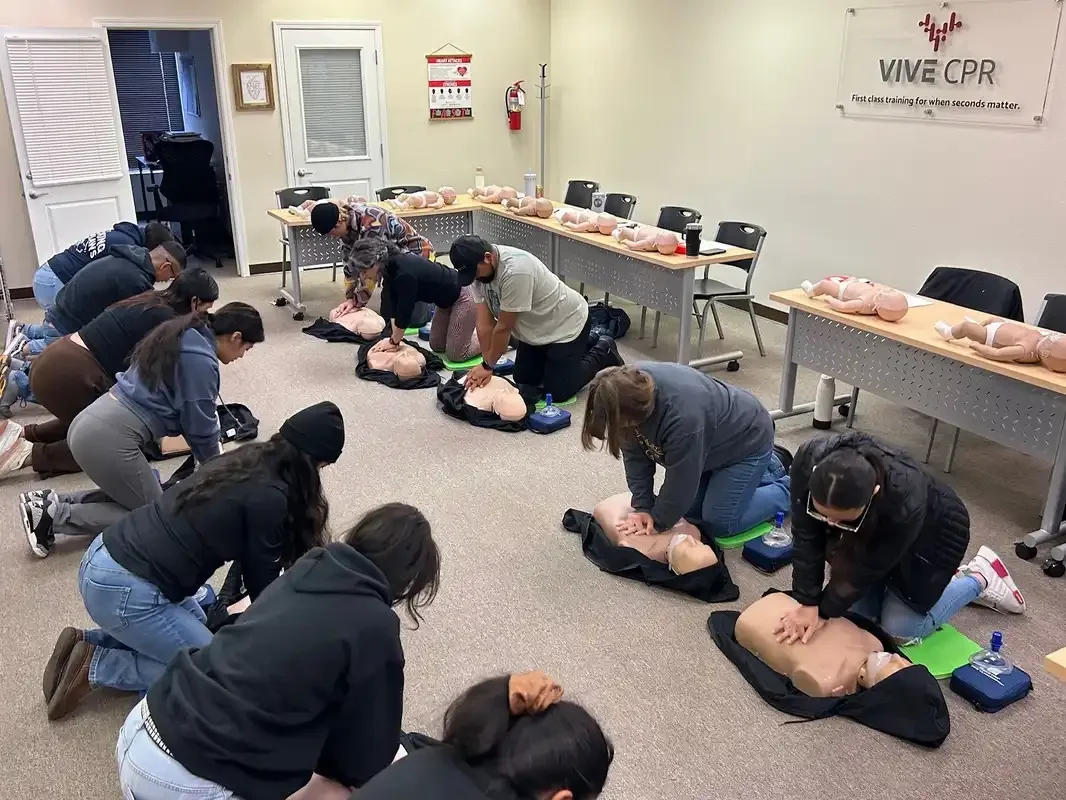
Finding a high-quality, professional training site is the next step. As an American Heart Association (AHA) Training Site based in Rohnert Park, California, we at Vive CPR serve Lake County, CA, and the surrounding Northern California communities, including Sonoma, Napa, and Marin counties.
When searching for the right training provider, look for an organization that uses professional first responders and healthcare professionals as instructors. Firefighters, paramedics, registered nurses (RNs), and EMTs bring real-world, high-stress emergency experience into the classroom, turning dry textbook material into engaging, practical skills.
If you are wondering how to select the absolute best local training center, read our resource on Where is the Best CPR Certification Class Near Me?.
Registration, Costs, and 2026 Class Schedules
Navigating class costs and schedules should be straightforward. In Northern California, registration is typically handled online through secure booking calendars.
To understand what goes into training fees and why quality instruction matters, you can explore our article on The Real Cost of Saving Lives. Here is what you can generally expect regarding pricing and schedules for CPR certification Lake County courses in 2026:
- AHA Basic Life Support (BLS): Usually ranges from $80 to $120. Classes are offered weekly, with morning, evening, and weekend slots available to accommodate busy healthcare shift schedules.
- Heartsaver First Aid CPR AED: Typically ranges from $90 to $150 depending on whether you combine both certifications.
- Heartsaver Pediatric First Aid CPR AED (EMSA Compliant): Generally ranges from $100 to $160. Because this must be taught in a fully in-person, instructor-led format, seats fill up quickly, making early registration highly recommended. In some counties, there are CA state grant funds available to help pay for the cost of the class. Typically the student pays for the class first, then is partially reimbursed for the cost after submitting evidence of payment and certification.
- Advanced Courses (ACLS & PALS): Usually run between $200 and $400. These intensive courses are offered multiple times a month for advanced practice clinicians.
Certification Validity, Renewal, and Onsite Group Training
Most professional CPR, BLS, ACLS, and PALS certifications are valid for two years from the date of issue. The only exceptions are specialized courses like Bloodborne Pathogens, which is valid for one year and issued as a paper certificate, and STOP THE BLEED®, which does not expire.
Staying on top of your renewal date is critical. If your certification expires, many employers will not allow you to work until you complete a full course again (Blended Learning formats are accepted). For those managing professional medical credentials, you can check out our tips on keeping your advanced skills sharp with Don’t Skip a Beat with Sonoma ACLS Renewal.
Onsite and Corporate CPR Certification Lake County Services
If you run a local business, school, dental clinic, or community group, sending your entire team to an offsite classroom can be a logistical nightmare. That is where onsite training comes in handy.
Bringing an instructor directly to your workplace helps your staff train together using the same layout and equipment they may rely on in a real emergency. Explore our workplace CPR training options for group training, onsite scheduling, and workplace safety needs.
For those interested in community-wide disaster preparedness and volunteer emergency response, you can also learn about local volunteer efforts through the Community Emergency Response Team (CERT) program.
Frequently Asked Questions About Lake County CPR Classes
How long do CPR certifications last and how do I renew them?
Standard AHA CPR, BLS, ACLS, and PALS certifications last for two years. To renew your card, you must complete another course before your current card’s expiration date. You can explore upcoming dates and enroll directly by visiting our enrollment page.
Can I get certified online or is an in-person Skills Session required?
While you can complete the cognitive, self-paced portion of your training online through AHA Blended Learning, you cannot get a fully compliant professional certification through an online-only course. For healthcare professionals, nearly all employers and licensing agencies will not accept online-only BLS, ACLS, or PALS certifications.
To receive an official AHA eCard, you must complete an in-person, hands-on Skills Session with an instructor to verify your compression depth, rate, and ventilation technique. We do not use automated Voice-Assisted Manikin (VAM) training; our Skills Sessions are always completed in person with a live instructor.
To learn more about the differences between digital and hands-on formats, check out our guide on Online CPR Certification.
What is the minimum age to learn CPR?
The American Heart Association does not set a formal minimum age for learning CPR. The real question is whether the student has enough physical strength to perform compressions correctly. Research shared by the AHA shows that children as young as nine can learn and retain CPR skills.
For parents and guardians looking to protect the youngest members of their families, we also provide specialized non-certification classes. Learn more about our family safety options through our Infant CPR for Parents class.
Conclusion and Next Steps for Your Lifesaving Journey
When a cardiac emergency strikes, every second counts. Having the confidence, knowledge, and muscle memory to step in and perform CPR can completely change the outcome for someone in need.
At Vive CPR, we are proud to be an American Heart Association (AHA) Training Site based in Rohnert Park, California, serving Lake County, CA, and the wider San Francisco Bay Area. Our classes are taught by professional first responders and healthcare workers who bring real-world experience, clarity, and warmth to every session. We offer weekday, evening, and weekend schedules, with same-day certification eCards issued upon successful completion of your course.
Don’t wait until an emergency happens to wish you knew what to do. Take the first step today and enroll in a CPR class today to gain the skills that save lives!
