

Why Choosing the Right AHA BLS Course Matters for Your Career
The American Heart Association Basic Life Support for healthcare provider course is the gold-standard certification required by most hospitals, clinics, and healthcare employers across the United States. If you’re a nurse, EMT, medical student, or any other healthcare professional, this is likely the exact certification your employer or licensing board is asking for.
Here’s a quick overview of what you need to know:
| Detail | Summary |
|---|---|
| Who it’s for | Nurses, physicians, EMTs, dental professionals, medical students, and other healthcare personnel |
| Skills covered | High-quality CPR, AED use, ventilation, team dynamics, choking relief |
| Course formats | Instructor-led classroom or Blended Learning (online + in-person Skills Session) |
| Time to complete | \~3 hours (classroom) or 1–2 hours online + 1 hour Skills Session (Blended Learning) |
| Certification validity | 2 years |
| CE/CME credits | Available depending on course format |
But not every format, provider, or course is the same — and picking the wrong one can mean wasted time, a card your employer won’t accept, or skills practice that doesn’t meet your licensing requirements.
This guide walks you through everything you need to know to choose the right AHA BLS course for your career stage, schedule, and workplace requirements.
What is the American Heart Association Basic Life Support for Healthcare Provider Course?
The American Heart Association Basic Life Support for healthcare provider course is designed to train healthcare professionals to recognize life-threatening emergencies, provide high-quality chest compressions, deliver appropriate ventilations, and provide early use of an Automated External Defibrillator (AED).
At its core, this training is built on evidence-based resuscitation science. The curriculum reflects the 2025 American Heart Association (AHA) Guidelines for CPR and Emergency Cardiovascular Care (ECC), along with international consensus from the International Liaison Committee on Resuscitation (ILCOR). When sudden cardiac arrest happens, immediate, high-quality CPR can double or triple a person’s chance of survival. This course helps healthcare professionals build the skills, speed, and confidence to respond when seconds matter.
To understand more about the foundations of this training, you can read The Ultimate Guide to BLS Certification Classes or visit the official AHA resource page on Basic Life Support (BLS) Training.
Who Needs to Take the American Heart Association Basic Life Support for Healthcare Provider Course?
This course is specifically built for individuals who provide direct patient care or work in clinical environments. This includes:
- Registered Nurses (RNs), Licensed Vocational Nurses (LVNs), and Nurse Practitioners (NPs)
- Physicians, Physician Assistants (PAs), and Medical Residents
- Emergency Medical Technicians (EMTs) and Paramedics
- Dentists, Dental Hygienists, and Dental Assistants
- Physical Therapists, Occupational Therapists, and Chiropractors
- Medical, Nursing, and Allied Health Students undergoing clinical rotations
If you fit into any of these categories and need to secure your credentials, you can register for our classroom BLS Certification course or choose the Blended Learning BLS Certification option.
Core Skills Taught in the American Heart Association Basic Life Support for Healthcare Provider Course
The curriculum is comprehensive and highly focused on practical, hands-on mastery. Key skills taught include:
- High-Quality CPR: Standardized techniques for adults, children, and infants, emphasizing proper compression rate (100 to 120 compressions per minute), depth (at least 2 inches but no more than 2.4 inches for adults), and allowing complete chest recoil.
- AED Operation: Rapid and safe use of an Automated External Defibrillator for all age groups.
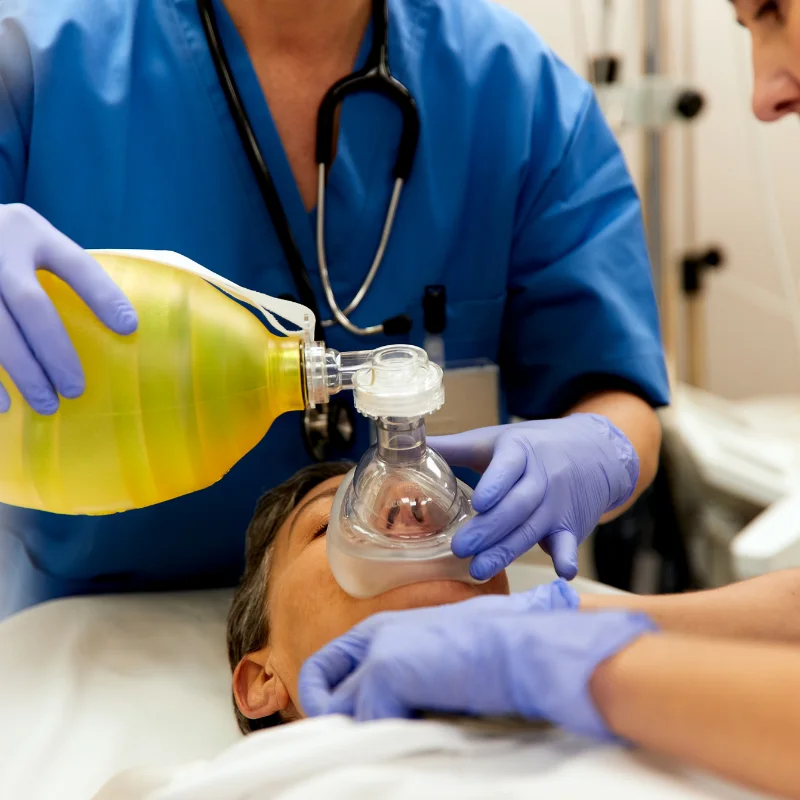
- Ventilation Techniques: Effective use of barrier devices, pocket masks, and bag-mask devices (BVMs) to deliver rescue breaths.
- Team Dynamics: Understanding how to perform as an effective team member or leader during a multi-rescuer resuscitation attempt.
- Choking Relief: Foreign-body airway obstruction clearance for responsive and unresponsive adults, children, and infants.
- Special Situations: Recognizing and responding to opioid-associated life-threatening emergencies, as well as critical updates such as alternative infant compression techniques and cardiac arrest scenarios involving pregnant or female victims.
These core skills and decision-making pathways are guided by structured BLS Algorithms that help clinicians act rapidly and systematically under pressure.
Comparing AHA BLS Course Formats: Classroom vs. Blended Learning
The American Heart Association offers flexibility in how you complete your training. While both options result in the exact same official AHA BLS Provider eCard (valid for two years), they cater to different schedules and learning styles.
1. Traditional Instructor-Led Classroom Training
In this format, the entire course is conducted in a physical classroom setting. An instructor guides you through video-based lessons, hands-on practice, and a written exam.
- Time Commitment: Approximately 3-4.5 hours for an initial course, or about 2-3 hours for a renewal class.
- Best For: Learners who prefer real-time, face-to-face interaction, structured group practice, and immediate feedback from an expert.
2. Blended Learning (HeartCode® BLS)
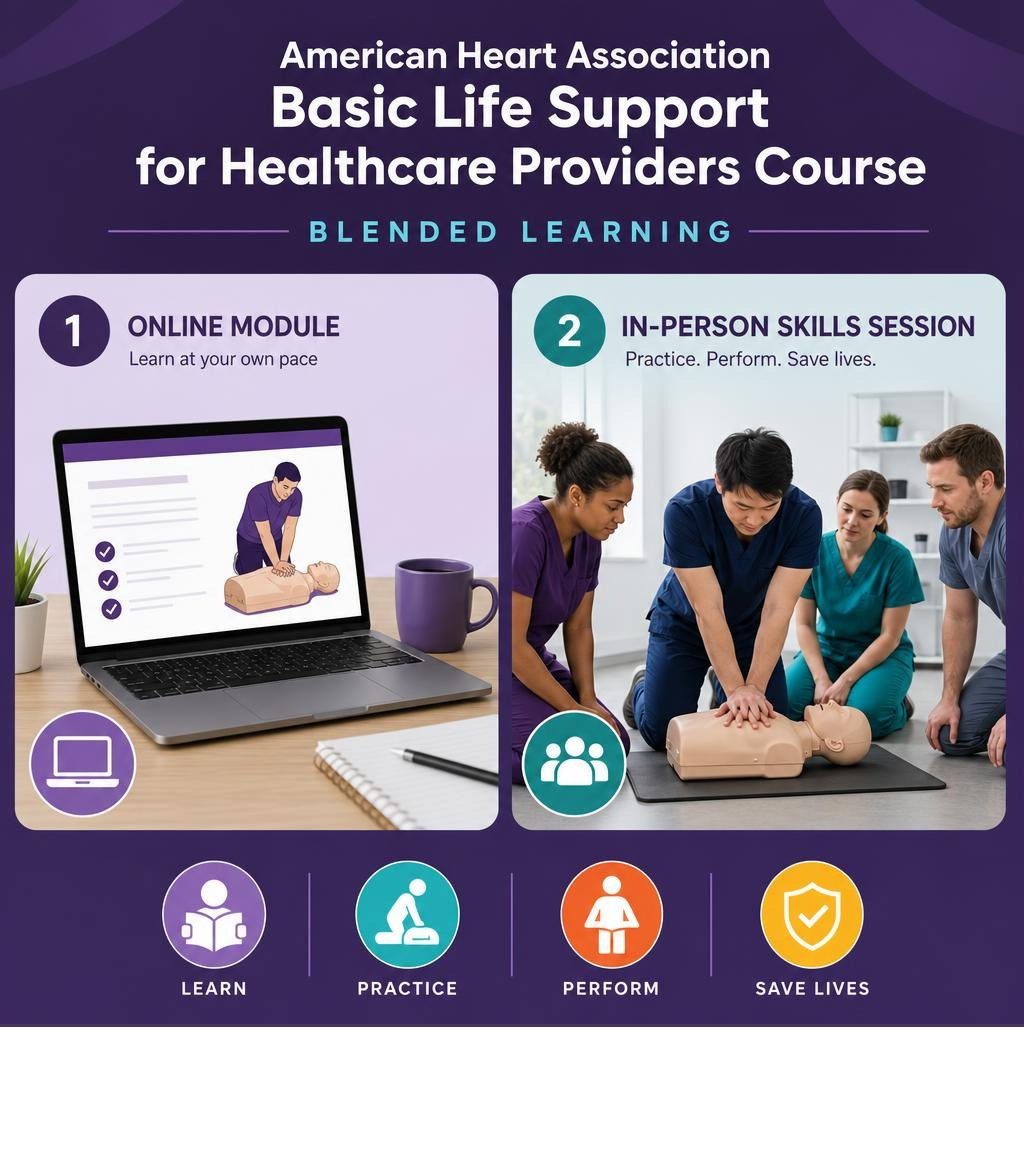
Blended Learning splits your training into two parts. First, you complete an interactive, self-paced online module using the AHA’s adaptive learning platform. Afterward, you complete a hands-on Skills Session to verify your physical competency. This Skills Session may be completed with an AHA instructor or, where available, with a Voice Assisted Manikin.
- Time Commitment: The online portion typically takes 1 to 2 hours. The Skills Session takes about 30 minutes to 1 hour, depending on the format. For some learners, Blended Learning can reduce total training time because they move through the online content at their own pace.
- Best For: Busy professionals who need to minimize classroom time and prefer to study theory on their own schedule.
At Vive CPR, we offer both options. You can enroll in either the Instructor-Led BLS class or the Blended Learning BLS class on our class enrollment page.
Classroom vs. Blended Learning Comparison Table
| Feature | Traditional Classroom | Blended Learning (HeartCode® BLS) |
|---|---|---|
| Online Work | None | 1 to 2 hours (self-paced) |
| In-Person Time | \~2 to 4.5 hours | 30 minutes – 1 hour (Skills Session) |
| Instructor Interaction | Continuous throughout class | Intensive during the Skills Session (if Instructor-Led), or None (if Voice Assisted Manikin) |
| Testing | In-class written exam & skills testing | Online cognitive testing & in-person skills testing |
| Card Issued | Official AHA BLS Provider eCard | Official AHA BLS Provider eCard |
| Validity | 2 Years | 2 Years |
BLS vs. CPR vs. First Aid: Understanding the Differences
It is common to confuse these terms, but choosing the wrong course can leave you with a certificate that does not meet your professional licensing requirements.
- Basic Life Support (BLS): This is specifically designed for healthcare professionals and public safety personnel. It covers advanced concepts such as multi-rescuer team dynamics, bag-mask ventilation, advanced airway management, and clinical decision-making.
- Cardiopulmonary Resuscitation (CPR): Often referred to as “Heartsaver” or “Community CPR,” these courses are designed for lay responders (teachers, fitness trainers, construction workers, or parents). They focus on single-rescuer CPR and basic AED use without the advanced clinical elements. To learn more or sign up for layperson training, check out our CPR Certification page or explore the AHA’s Heartsaver® CPR AED Training page.
- First Aid: This covers immediate medical care for non-cardiac emergencies, such as wound care, burn treatment, bone fractures, and environmental emergencies. This is often paired with CPR for workplace safety compliance. You can learn more about these combined options on our CPR First Aid Certification page.
How to Renew Your BLS Certification and Earn CE/CME Credits
Your AHA BLS Provider card is valid for two years and typically expires at the end of the expiration month listed on the card. To maintain your clinical credentials, complete another course before your current card expires.
When you renew your certification, you may also be eligible for Continuing Education (CE) or Continuing Medical Education (CME) credits. Credit acceptance can vary by profession, course format, and licensing agency, so always confirm requirements with your licensing board.
To ensure you receive your new credentials seamlessly, we issue your official AHA eCard on the very same day you successfully complete your class or Skills Session.
Frequently Asked Questions About BLS Certification
How long does the BLS course take to complete?
At Vive CPR, our in-person classroom BLS course takes approximately 3 hours. If you choose the Blended Learning format (HeartCode BLS), you will spend about 1 to 2 hours completing the online portion, followed by a 1-hour hands-on Skills Session in our classroom.
What type of certification card is issued?
Upon successful completion of either the classroom or Blended Learning course, you will receive an official American Heart Association BLS Provider eCard. This digital certificate is identical across both formats, widely accepted by healthcare employers nationwide, and valid for two years.
Can I complete my BLS skills testing virtually?
The short answer is: not for standard clinical employment. While the AHA does have technical checklists for virtual testing under highly specific circumstances (such as those outlined in the HeartCode® BLS Virtual Skills (Adult) document), the vast majority of healthcare employers and licensing boards require physical, in-person hands-on skills verification.
At Vive CPR, we believe that high-quality resuscitation skills are best developed through real-world, in-person instruction. That is why all of our Skills Sessions are completed in person with a live instructor. We do not use automated Resuscitation Quality Improvement (RQI) booths or Voice-Assisted Manikin (VAM) training. You will always practice with and receive feedback from a real, experienced first responder or healthcare professional.
Conclusion: Take the Next Step in Your Healthcare Career
Choosing the right American Heart Association Basic Life Support for healthcare provider course is a critical step in building and maintaining your career in medicine, nursing, or emergency services.
At Vive CPR, we are an official AHA Training Site based in Rohnert Park, California. We proudly serve students and professionals throughout Sonoma County, Napa, Marin, and the greater San Francisco Bay Area—including Rohnert Park, Santa Rosa, Petaluma, Cotati, Windsor, Sebastopol, Sonoma, Novato, San Rafael, and Napa.
Our classes are taught by active, professional first responders and healthcare specialists—including firefighters, paramedics, and registered nurses—who bring real-world emergency experience into the classroom. We offer flexible weekday, evening, and weekend scheduling, and we issue your official AHA certification eCard on the very same day you pass your class.
Ready to get certified? Enroll in an AHA BLS Course with us today!
