

Understanding where Basic Life Support (BLS) fits into the wider spectrum of emergency cardiovascular care is essential for any medical professional. While it is often referred to as the foundation of all resuscitation training, its clinical impact is sometimes underestimated.
To help visualize how these different levels of care interact, look at this emergency response sequence:
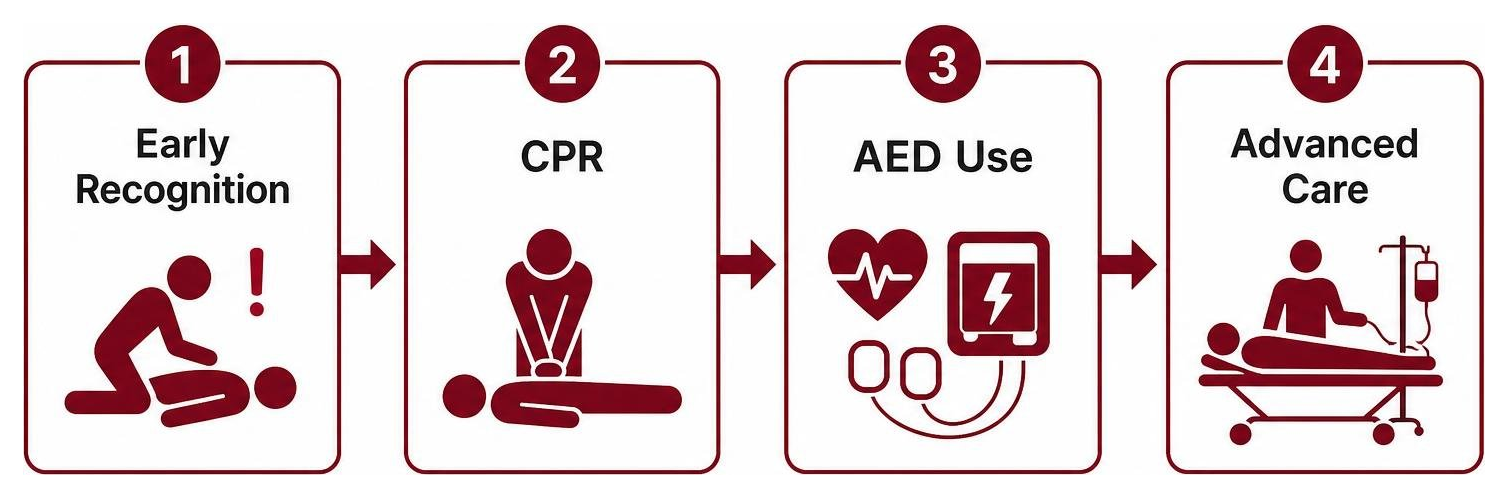
When an emergency occurs, the transition from basic interventions to advanced procedures must be seamless. Let’s look at how BLS compares to Advanced Life Support (ALS) and other specialized protocols.
Understanding Basic Life Support (BLS) Skills and Target Audience
At its core, Basic Life Support is designed to keep a patient alive by maintaining systemic circulation and oxygenation until advanced medical teams can take over. The skills taught in a standard BLS curriculum are highly focused, hands-on, and time-sensitive. They include:
- High-Quality Cardiopulmonary Resuscitation (CPR): Performing chest compressions of the correct depth and rate for adults, children, and infants, ensuring complete chest recoil.
- Automated External Defibrillator (AED) Use: Safely and rapidly operating an AED for patients of all ages to shock lethal heart rhythms.
- Airway Management and Rescue Breathing: Utilizing barrier devices, pocket masks, and bag-valve-mask (BVM) resuscitators to deliver effective ventilation.
- Choking Relief: Executing abdominal thrusts and back blows for conscious and unconscious choking victims across different age groups.
- Team Dynamics: Understanding how to communicate clearly and delegate roles in multi-rescuer resuscitation scenarios.
The target audience for BLS includes registered nurses (RNs), physicians, emergency medical technicians (EMTs), paramedics, dental professionals, physical therapists, and medical students. Because these professionals are expected to respond to life-threatening emergencies in clinical and pre-hospital environments, standard “layperson” CPR classes simply do not meet their professional requirements. For those preparing to take these courses, you can learn more about what is covered during a learn more about what is covered during a BLS certification class to understand the specific skills required.
BLS vs. ALS: Clinical Outcomes and Survival Rates
In the pre-hospital environment, emergency medical services are generally divided into Basic Life Support (BLS) and Advanced Life Support (ALS). While ALS ambulances are staffed by paramedics who can perform invasive procedures like endotracheal intubation, intravenous (IV) access, and medication administration, BLS units are staffed by EMTs who focus on non-invasive life-saving measures.
Interestingly, scientific evidence does not always show that more invasive care leads to better patient outcomes. A landmark study published in the medical literature, Outcomes of Basic Versus Advanced Life Support for Out-of-Hospital Medical Emergencies, analyzed large-scale observational data from Medicare beneficiaries to compare these two levels of care.
The findings were highly surprising to many in the medical community:
- Higher Survival Rates: Propensity score analyses revealed that 90-day survival was 6.1 percentage points higher with BLS than ALS for major trauma patients.
- Stroke Outcomes: For stroke patients, 90-day survival was 7.0 percentage points higher with BLS than ALS.
- Neurologic Functioning: BLS patients were 0.22 percentage points less likely to have poor neurologic functioning compared to ALS patients in trauma cases.
- Economic Impact: Beyond clinical outcomes, the study highlighted massive financial differences. Medicare would have spent approximately $322 million less on ambulance services in 2011 alone if all ground emergency rides had utilized BLS instead of ALS.
These statistics do not mean ALS is unnecessary; rather, they emphasize that high-quality, uninterrupted basic interventions such as immediate chest compressions and rapid defibrillation are the true drivers of survival. If the basic foundation is weak, advanced interventions cannot save the patient. For a deeper dive into these comparisons, check out The Ultimate Guide to BLS Certification Classes.
How BLS Integrates with ACLS and PALS
Advanced Cardiovascular Life Support (ACLS) and Pediatric Advanced Life Support (PALS) do not replace BLS; they build directly on top of it. You cannot run a successful advanced code without high-quality BLS happening at the same time.
- ACLS Integration: While an ACLS team manages advanced airway devices, interprets electrocardiograms (ECGs), administers medications like epinephrine or amiodarone, and manages post-cardiac arrest care, they rely entirely on the BLS team to maintain continuous chest compressions and ventilations. If compressions stop or are done poorly, the medications administered during ACLS will not circulate to the heart and brain.
- PALS Integration: PALS focuses on pediatric respiratory emergencies, shock, and cardiac arrest. It uses an “assess-categorize-decide-act” systematic approach. However, if a child or infant deteriorates into active cardiac arrest, the provider must immediately transition into high-quality pediatric BLS.
Most healthcare employers require critical care staff to hold BLS and ACLS, or PALS for pediatric care, at the same time. BLS provides the foundation, while ACLS and PALS build on it with advanced team-based resuscitation steps.
Choosing the Right BLS Certification: Online vs. In-Person
When searching for an online BLS certification, you will usually find two main options: 100% online courses and Blended Learning programs, also called hybrid or e-learning courses. Blended Learning programs consist of a BLS Online Course, followed by a BLS Skills Session. The Skills Session can either be completed with an instructor or with a Voice Assisted Manikin (VAM).
Separately, there are instructor-led BLS courses that are completed 100% in person.
Here is a comparison of the online BLS and Blended Learning BLS course features:
| Feature | 100% Online BLS Programs | Blended Learning BLS: VAM Skills Session | Blended Learning BLS: Instructor-Led Skills Session |
|---|---|---|---|
| Cognitive Learning | Completed online at your own pace | Completed online via HeartCode BLS | Completed online via HeartCode BLS |
| Hands-On Skills Practice | None, or simulated on a screen | In person on a physical Voice-Assisted Manikin and a computer | In person on physical manikins |
| Instructor Feedback | None | Limited computer-based feedback | Real-time, personalized guidance from an instructor |
| AHA Course Completion Card | No, issued by non-AHA third parties | Yes, official AHA BLS Provider eCard | Yes, official AHA BLS Provider eCard |
| Employer Acceptance Rate | Extremely low, typically under 10% in clinical settings | Lower than instructor-led, since some employers require instructor-led skills testing | 100% across hospitals and clinics |
The Pros and Cons of Blended Learning BLS Certification
Blended Learning is widely considered the gold standard for busy healthcare professionals in 2026. This format combines the best of both worlds: the convenience of self-paced online education and the clinical safety of hands-on skills verification.
- The Pros: You can complete the cognitive portion of the class on your computer, tablet, or phone from home. You can pause, save your progress, and come back whenever your schedule allows. Once that is done, you attend a short, focused in-person Skills Session to practice and demonstrate your hands-on techniques. This saves hours of classroom time while still making sure you can perform CPR in a real emergency.
- The Cons: You still need to visit a physical training site for the hands-on portion. But because the classroom time is much shorter, these Skills Sessions are usually efficient and easy to fit into a busy schedule.
If you are looking for a flexible option that does not compromise on quality, you can learn more about Blended Learning BLS here to see how this format fits into your schedule.
Comparing Providers: American Heart Association vs. Non-Accredited Online Programs
A quick web search will reveal dozens of websites offering “instant, 100% online BLS certification” for incredibly low prices. They often advertise “no hands-on testing required” and claim “98% national acceptance.”
As a professional, you must look past the marketing. The American Heart Association (AHA) sets the national standards for cardiopulmonary resuscitation science. The vast majority of hospitals, clinics, nursing boards, and EMS agencies specifically mandate AHA-accredited BLS certifications.
Non-accredited, online-only programs are typically created by private companies that write their own exams. While they may claim to “follow AHA guidelines,” they cannot issue an official AHA BLS Provider card. To ensure you are enrolling in a program that meets regulatory standards, you can enroll in our American Heart Association Blended Learning BLS class.
Nationwide Acceptance and Employer Requirements
Hospitals, emergency medical services, and state licensing boards maintain strict compliance policies. If your job description involves direct patient care, your employer will almost certainly require an AHA BLS Provider card.
This is especially true in California and the San Francisco Bay Area. If you present a 100% online certificate without a hands-on skills verification signature, human resources will likely reject it, forcing you to pay for and take another class. To avoid gaps in your employment, it is always safest to choose an AHA-approved course. For those who need multiple advanced credentials, you can combine your Blended Learning BLS and ACLS certification classes to complete both requirements efficiently.
The Process, Costs, and CME Credits for BLS Certification and Recertification
Earning or renewing your BLS advanced medical certification is a straightforward process when you know what to expect.
To help visualize this hands-on verification process, here is what a typical Skills Session looks like under professional guidance:
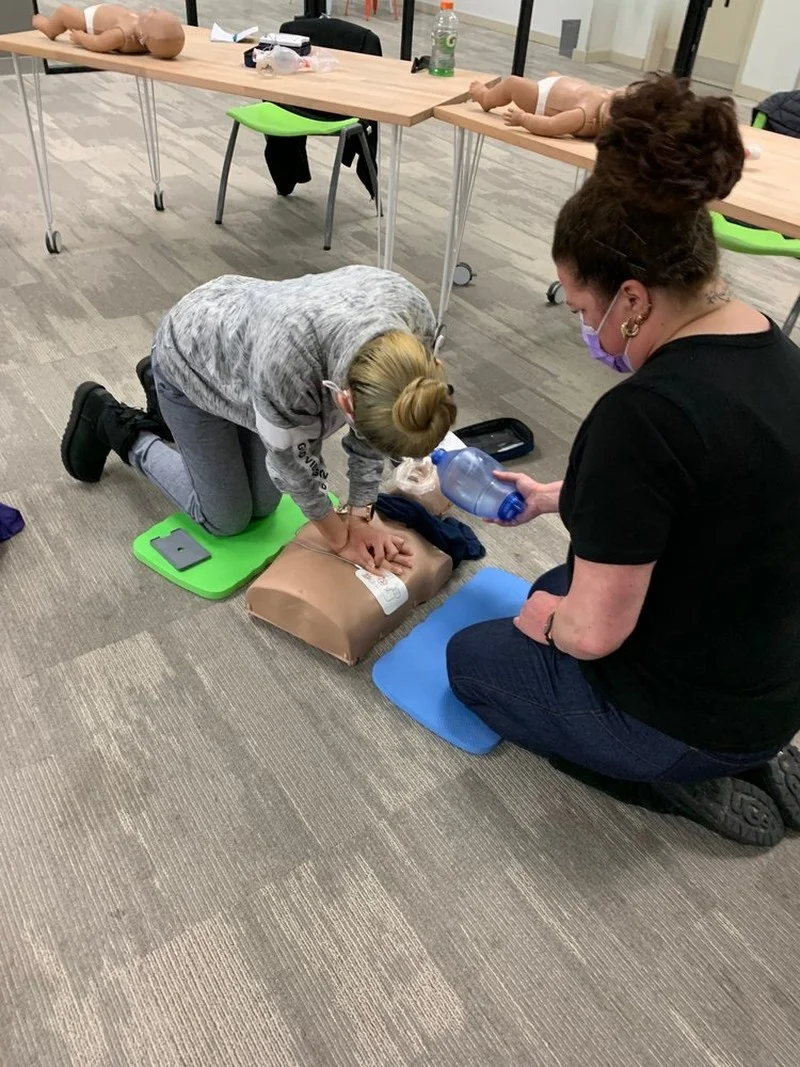
During this in-person session, you will practice your physical techniques on high-fidelity training manikins. Let’s break down the step-by-step process, costs, and continuing education credits involved.
Step-by-Step BLS Blended Learning Certification Process
If you choose the Blended Learning format, the process is simple and can be completed in a few steps:
- Register for the Course: Sign up for a Blended Learning BLS class. You will receive an activation link for the online cognitive portion.
- Complete the Online Modules: Log in to the AHA eLearning portal and complete the self-paced interactive lessons, videos, and scenario-based exercises. This typically takes 1 to 2 hours.
- Complete the Course Survey: Finish the required course survey in the AHA portal. This step is required before you can access your BLS Online Course completion certificate.
- Print Your Certificate: Print or save your online course completion certificate.
- Attend the In-Person Skills Session: Bring your completion certificate to our training site in Rohnert Park. An experienced instructor will guide you through hands-on practice for adult, child, and infant CPR, BVM ventilation, and AED use.
- Receive Your AHA BLS Provider eCard: Once you successfully demonstrate these physical skills, your official AHA BLS Provider eCard is issued the very same day.
If you are ready to start this process, you can enroll in a Blended Learning BLS class today to secure your spot.
BLS Certification vs. Recertification: Costs and CME Credits
Whether you are taking the course for the first time or renewing an expiring credential, there are a few practical details to keep in mind:
- Validity Period: Your BLS certification is valid for exactly two years from the date of issue. It expires on the last day of the month in which it was earned.
- Recertification Requirements: If your card is still active, you can take a shorter, streamlined renewal course. If your certification has completely expired, you must take the full course or hte Blended Learning course again to regain active status.
- CME/CE Credits: For licensed healthcare professionals, completing an accredited BLS course provides valuable continuing medical education (CME) or continuing education (CE) credits. For example, our BLS courses are eligible for CE credits that can be applied directly to nursing, EMT, or medical board license renewals.
- Costs: Prices vary depending on the format and location. Generally, Blended Learning options can be about the same price or slightly more expensive than instructor-led classes because they offer more convenience.
To help you study and prepare for the cognitive portion of your training, we recommend reviewing the standard BLS Algorithms in advance.
Frequently Asked Questions About BLS Certification
Navigating the rules around medical certifications can be confusing. Here are answers to some of the most common questions we receive from healthcare providers in the San Francisco Bay Area.
Can I complete my entire BLS certification 100% online?
No, not if you want a card that is accepted by healthcare employers. While you can complete the cognitive, lecture-based portion of the course online, the American Heart Association requires an in-person, hands-on Skills Session with an approved instructor to issue an official BLS Provider eCard.
This requirement exists because CPR is a physical psychomotor skill. You cannot learn the physical muscle memory of proper chest compression depth, compression rate, or bag-valve-mask sealing through a computer screen.
How long is a BLS provider card valid?
An official American Heart Association BLS Provider card is valid for two years. To maintain continuous certification status and avoid compliance issues with your employer, you should schedule your renewal course at least a few weeks before your current card’s expiration date.
Does Vive CPR use Voice-Assisted Manikins (VAM) or RQI for BLS certification?
No, we do not. At Vive CPR, we believe that high-quality resuscitation training requires real human interaction. We do not use Resuscitation Quality Improvement (RQI) computer kiosks or Voice-Assisted Manikin (VAM) training for BLS certification.
Our Skills Sessions are always completed in person with a live instructor who is an experienced, professional first responder or healthcare provider. This ensures you receive personalized coaching, real-time feedback, and practical tips that a computer screen simply cannot provide.
Conclusion
When a life-threatening cardiac or respiratory emergency occurs, there is no substitute for high-quality, confident action. Getting your BLS advanced medical certification is more than just checking a box for human resources — it is about ensuring you are fully prepared to save a life when every second counts.
To prepare for your upcoming training, take a look at what our local classroom environment looks like:
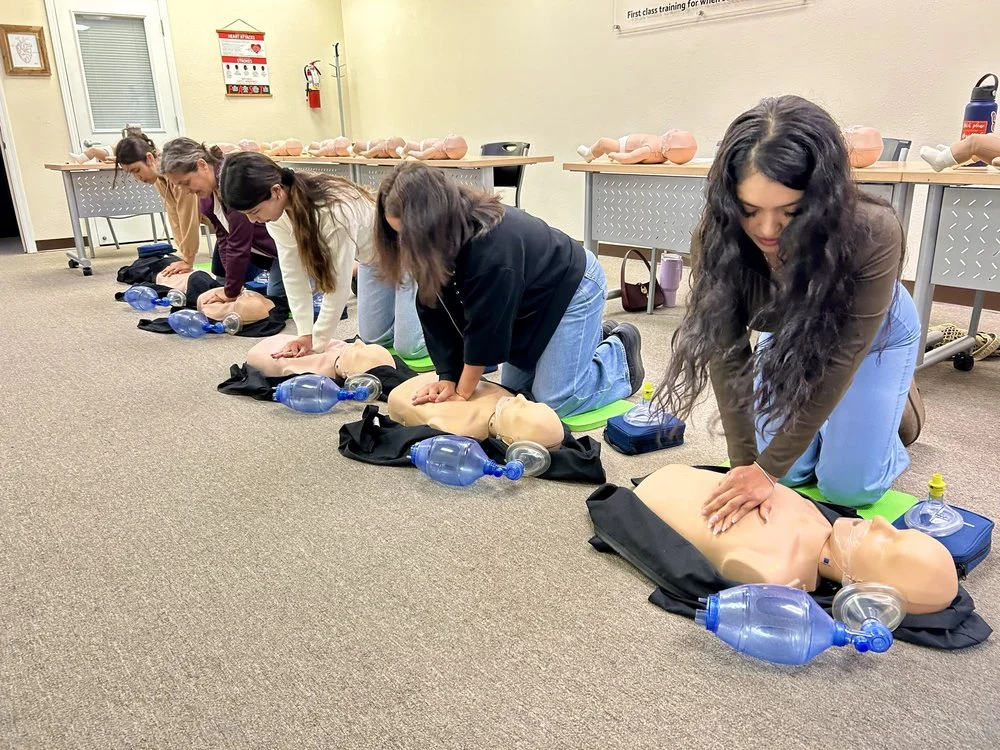
At Vive CPR, we make the certification process as fast, convenient, and stress-free as possible. As an official American Heart Association Training Site based in Rohnert Park, California, we proudly serve individual healthcare providers, emergency responders, dental teams, and corporate groups across:
- Sonoma County (Santa Rosa, Rohnert Park, Petaluma, Cotati, Windsor, Healdsburg, Guerneville, Sebastopol, Sonoma)
- Napa County (Napa, American Canyon, St. Helena, Calistoga, Yountville)
- Marin County (Novato, San Rafael, Corte Madera, Mill Valley, Larkspur, San Anselmo, Tiburon, Sausalito)
- The greater Northern San Francisco Bay Area
Our classes are taught by active, professional first responders — including firefighters, paramedics, registered nurses, and EMTs — who bring real-world emergency experience into the classroom. We offer flexible weekday, evening, and weekend scheduling, and we issue your official AHA certification card on the very same day you complete your training.
Don’t let your compliance slip. If you need assistance with scheduling, private tutoring, or group rates, please contact us directly through our website. Otherwise, you can secure your seat and enroll in a local BLS class today to get certified by the best in the Bay Area.
