

In the world of 2026, the traditional model of sitting in a windowless room for eight hours on a Saturday is no longer the only way to learn life-saving skills. To meet the needs of busy professionals and families, training has evolved into several distinct formats.
Blended Learning: The Best of Both Worlds
Blended Learning is a smart option for people looking for first aid classes flexible enough to fit a busy schedule. This format breaks training into two parts. first, you complete the cognitive, or theory, portion online at your own pace. You can log in when it works for you, pause as needed, and come back later.
After that, you complete a short hands-on Skills Session. This may be instructor-led or led by a VAM, or voice assisted manikin, though in-person instructor guidance is generally the stronger choice for learning and feedback. The practical portion helps you build real first aid skills such as putting on and removing gloves, bandaging, wound care, tourniquet use, and EpiPen administration, without taking a full day away from work or home.
In-Person Instructor-Led Training
For those who prefer immediate feedback and the social environment of a classroom, traditional in-person sessions remain available. We offer these at our Rohnert Park classroom with a focus on high-quality local training. These sessions are perfect for learners who want to ask questions in real-time and get their certification completed in a single block of time.
Onsite and Group Training
If you need the most convenient option for a team in Santa Rosa or Sonoma County, having the class come to your location is often the easiest fit. With onsite training, instructors bring the tourniquets, bandages, EpiPen trainers, and other first aid supplies directly to your workplace, school, or community space. That cuts down on travel time, keeps scheduling simpler for your staff, and allows the session to match the real risks in your environment. You can also add CPR and AED training to a first aid class for more complete safety training.
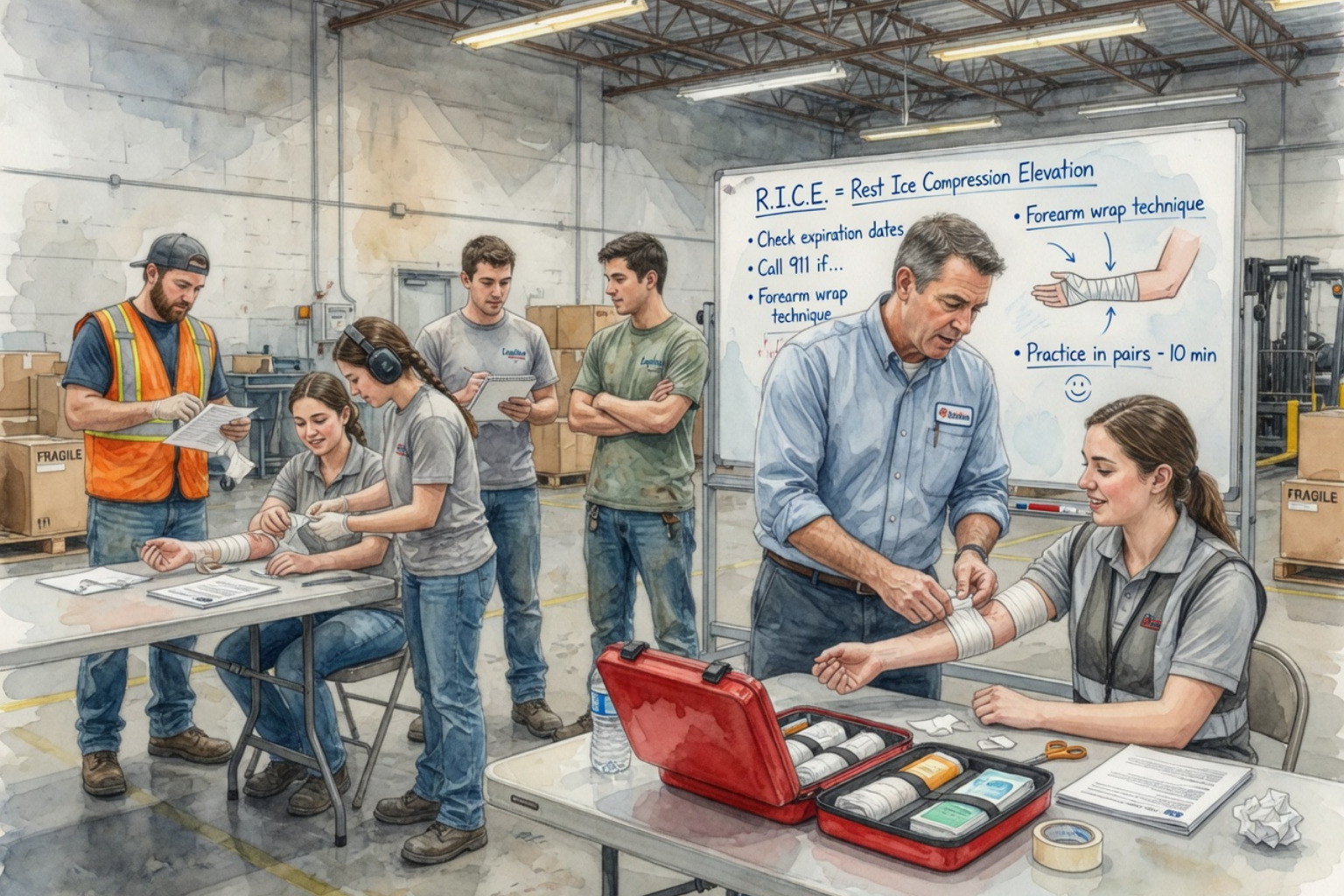
Delivery Methods Summary
- Classroom Training: Traditional, comprehensive, and all in person.
- Blended Learning: Hybrid approach – online and in person; maximum scheduling control.
- Onsite Training: Ultimate convenience for families, groups, and businesses.
- Bilingual Options: We offer training in Spanish to ensure all members of our community can learn effectively.
For more information on the specific types of credentials we offer, you can explore our certification classes.
Why Choose a Flexible First Aid Class for Professionals?
For many, getting certified isn’t just a personal goal — it’s a job requirement. Regulatory bodies like OSHA (Occupational Safety and Health Administration) and EMSA (Emergency Medical Services Authority) have strict standards for what counts as a valid certification.
OSHA and Workplace Safety
OSHA standard 29 CFR 1910.151 says employers must ensure medical personnel or people trained in first aid are readily available. In practice, online-only courses are usually not enough for workplace compliance because first aid and CPR involve physical skills that need to be demonstrated in person. Flexible first aid classes with a blended format make this easier by combining online learning with a hands-on skills check.
EMSA and Childcare Requirements
In California, childcare providers must meet specific EMSA standards. Our Pediatric CPR First Aid Certification class is specifically designed for licensed childcare providers such as preschool teachers and daycare owners in areas like Windsor, Healdsburg, and Petaluma. These courses focus on the unique physiological needs of infants and children, which differ significantly from adults in terms of compression depth and rescue breathing ratios.
Professional Requirements by Industry
| Industry | Primary Requirement | Recommended Format |
|---|---|---|
| Healthcare (Nurses, EMTs) | BLS (Basic Life Support) | Instructor-Led or Blended Learning |
| Licensed Childcare Facilities | Pediatric CPR First Aid | Required to be Instructor-Led (EMSA Approved) |
| Construction / Industrial | OSHA CPR First Aid | Instructor-Led or Blended Learning Onsite Training |
| General Office / Retail | Adult CPR First Aid | Instructor-Led or Blended Learning |
| Families / New Parents | Infant and Child Preparedness – Infant CPR for Parents or Custom CPR class | Instructor-Led |
Essential Skills Covered in Modern Training
Modern first aid training is about more than just “putting a bandage on it.” It is a comprehensive system of response designed to bridge the gap between the moment an emergency occurs and the arrival of professional first responders.
Heartsaver Basic vs. Heartsaver Total for First Aid Training
If you need first aid-focused training, it helps to understand the two common American Heart Association Heartsaver First Aid paths: Heartsaver Basic and Heartsaver Total. The Heartsaver course path grid shows how these options are structured.
In simple terms, Heartsaver Basic covers core first aid topics like recognizing emergencies, handling injuries, controlling bleeding, and responding to sudden illness. Heart attack, stroke, allergic reactions, and shock are covered.
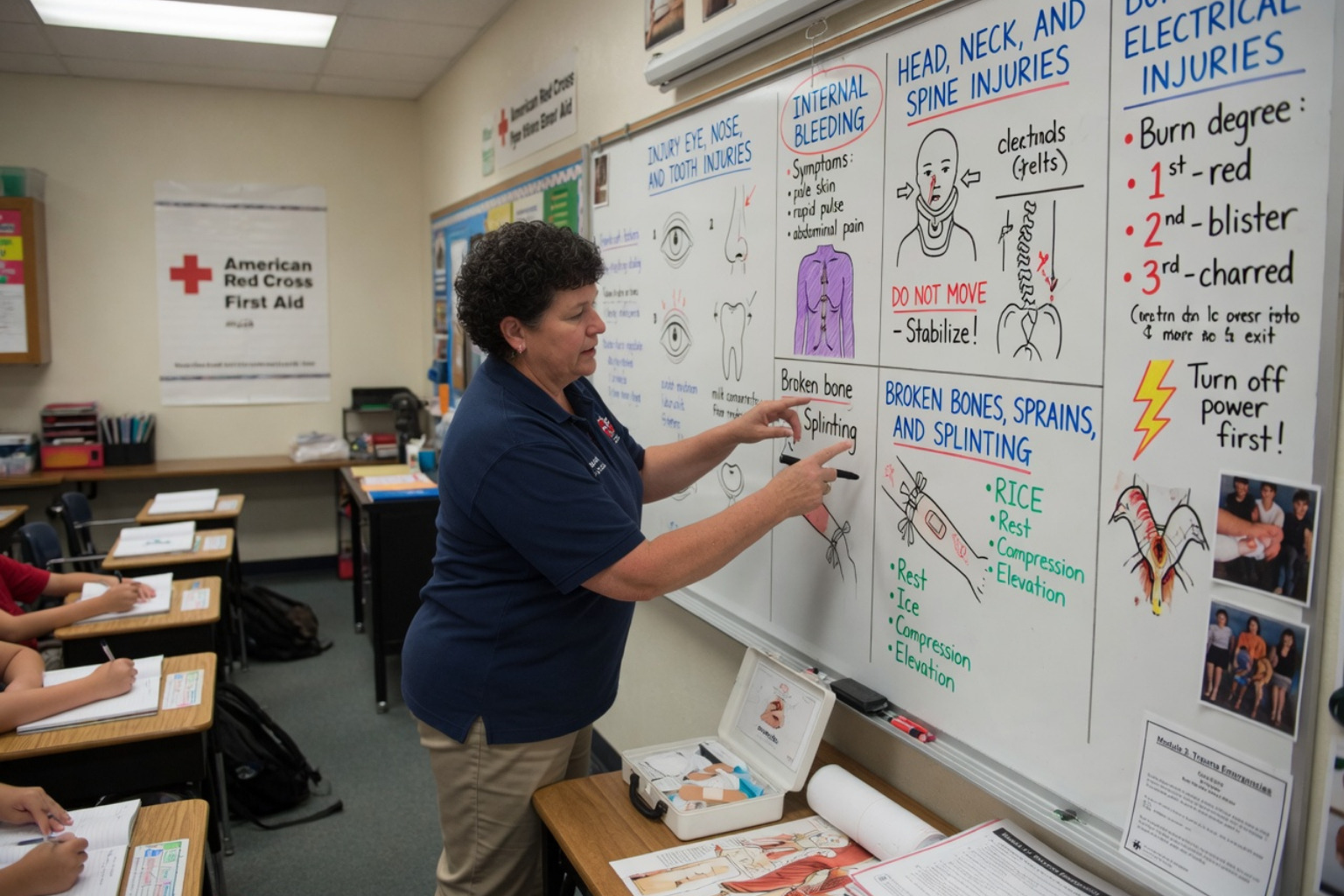
Heartsaver Total goes further, adding a broader workplace-response skill set for people who may need more complete OSHA-aligned training. This course path includes topics like penetrating injuries, amputation, internal bleeding, broken bones, burns, electrical injuries, bites and stings, heat-related emergencies, poison emergencies, diabetes, asthma, etc.
Bleeding Control and Opioid Overdose Response Training
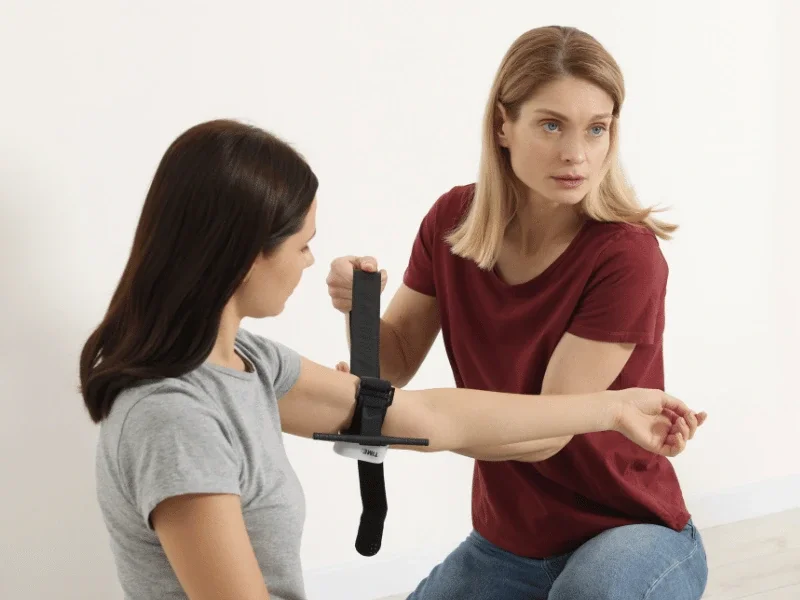
Severe bleeding can turn life-threatening fast. According to STOP THE BLEED®, a person with serious bleeding can die in as little as five minutes, which is why we include core bleeding-control skills in training. You will learn how to apply direct pressure and how to use a tourniquet correctly. If you want deeper trauma training, we also offer a separate STOP THE BLEED® class. For opioid overdose response, we teach naloxone basics in class, and we also offer a dedicated Harm Reduction (Narcan Training) class.
Allergic Reactions and EpiPen Use
Severe allergic reactions can become life-threatening within minutes, so this part of training focuses on early recognition and fast action. You learn how to spot warning signs such as trouble breathing, swelling, widespread hives, and changes in responsiveness, along with how to give initial care and properly use an EpiPen while waiting for emergency medical help.
If you’re ready to get started, you can enroll in a CPR First Aid certification class today.
Comparing Online-Only vs. Blended Learning for Certification
You may be wondering, “Can’t I just do the whole thing on my computer?” Online-only courses can be convenient for learning the basics, but they do not provide hands-on practice and may not meet employer, OSHA, or other regulatory requirements when a certification card is needed for work.
The Theory (Cognitive Learning)
Both online-only courses and Blended Learning cover the knowledge side of first aid through videos, interactive modules, and quizzes. This portion teaches the why and how behind your response, including scene safety, recognizing emergencies like heart attack warning signs, and understanding Good Samaritan protections.
The Physical Skill (Psychomotor Proficiency)
This is where training format matters most. First aid and CPR are hands-on skills, and research consistently shows that psychomotor abilities improve when learners physically practice with feedback, not just watch or click through lessons. For CPR especially, compression depth, rate, recoil, and hand placement are hard to master without live correction. That matters because high-quality CPR directly affects survival: the American Heart Association notes that immediate CPR can double or triple the chance of survival after cardiac arrest. In the U.S., more than 350,000 out-of-hospital cardiac arrests happen each year, so the quality of those physical skills is not a small detail. Online learning can build knowledge, but hands-on practice is what helps turn that knowledge into usable action in a real emergency.
Blended Learning allows you to reap the benefits of hands-on practice, by pairing the flexibility of the Online First Aid Certification or Online CPR First Aid Certification with an in-person Skills Session. During this session, an instructor — at Vive CPR, these are professional EMTs and paramedics — watches you perform the skills and provides real-time corrections.
Why Hands-On Matters
- True Understanding and Retention: Reading about emergencies helps, but physically practicing CPR, AED use, choking response, bleeding control, and recovery position techniques makes it much easier to respond calmly in a real situation.
- Real-time Instructor Feedback and Guidance: Hands-on training lets an instructor check details that matter, like compression depth and AED pad placement for CPR, or how to apply direct pressure to a wound, and use an EpiPen effectively for First Aid.
- Confidence-Building: First aid often involves quick decisions before professional help arrives. Practicing common scenarios helps you feel more prepared to recognize emergencies, protect the scene, and give the right care until EMS takes over. This allows you to jump into action quickly – a critical skill for life-threatening emergencies.
- Workplace and Regulatory Compliance: Many employers in Sonoma, Marin, and Napa counties look for training that includes an in-person skills check, especially when certification must reflect both knowledge and practical first aid ability.
Frequently Asked Questions about Flexible First Aid Training
Do online-only first aid classes meet OSHA requirements?
While online-only courses are incredibly flexible, they generally do not meet OSHA workplace requirements for industries where a trained first aid responder is mandated. OSHA requires that employees be able to demonstrate their proficiency. If your job requires a certification card to be on file, you almost certainly need a Blended Learning or Instructor-Led in-person course that includes a skills check. For businesses needing to get multiple people compliant at once, onsite training is usually the best path.
Where can I find flexible first aid classes that fit my schedule?
Finding a class that doesn’t require you to miss work is key. At Vive CPR, we provide a variety of options including daytime, evening, and weekend classes. Because we serve all of Sonoma County including Rohnert Park, Cotati, Windsor, Healdsburg, Santa Rosa, and Sebastopol, we offer many classes each month. If you have an urgent deadline, you can choose a class tomorrow. If you need flexibility or more time, choose a weekend class or schedule for next month. You can view our current openings and enroll in a class through our online portal.
How long is a first aid certification valid in 2026?
Most major certifications, including those from the American Heart Association (AHA), are valid for two years. As you approach your expiration date, it is wise to schedule a renewal class early so you don’t accidentally miss your deadline. If you’ve booked with us in the past, we’ll send you a handy reminder as you approach your certification expiration date. Once you complete your course with us, you receive a digital certificate that can be easily printed or emailed to your employer. You can always check our full list of certification classes to see which class is right for you.
Conclusion: Getting Certified on Your Terms
Emergency preparedness shouldn’t be a chore that you keep pushing to the bottom of your to-do list. By choosing first aid classes flexible enough for your lifestyle, you ensure that when “life happens,” you are ready to respond.
At Vive CPR, we take your training seriously because our instructors live it every day. As professional first responders, such as EMTs, paramedics, and firefighters, we know that the quality of the training you receive today could save a life tomorrow. We are an AHA Training Site with a classroom in Rohnert Park to serve the North Bay Area (from Windsor to Napa and Petaluma), and travel to provide onsite training throughout the greater San Francisco Bay Area.
We believe in the power of hands-on learning. That’s why we don’t offer online-only or voice-assisted manikin (VAM) training. Every student who certifies with us gets the benefit of real human feedback and professional expertise. Whether you need a bilingual Spanish session, an onsite class for your office, or a weekend Blended Learning class, we are here to help.
Don’t wait until an emergency happens to realize you aren’t prepared. Enroll in a class today and gain the confidence to make a difference.
