

Who Needs BLS Certification Classes – and Where to Start
BLS certification classes, also known as Basic Life Support training, are structured classes that teach healthcare professionals and first responders how to respond to life-threatening cardiac and breathing emergencies.
Here’s a quick overview of what you need to know:
| Question | Quick Answer |
|---|---|
| Who needs it? | Nurses, EMTs, physicians, dental staff, medical assistants, PTs, paramedics |
| What does it cover? | CPR, AED use, airway obstruction, team-based rescue for adults, children, and infants |
| How long does it take? | Instructor-Led Classroom Course: \~3 hours ). Blended Learning: 1-2 hrs online + 1 hr in-person Skills Session. |
| How long is it valid? | 2 years |
| Can it be done fully online? | No. A hands-on skills assessment is required for AHA compliance, licensing compliance, regulatory compliance, and often employer requirements. |
| Main providers | American Heart Association (AHA), American Red Cross |
If you work in healthcare, there’s a good chance BLS certification isn’t optional – it’s a requirement. Hospitals, clinics, licensing boards, and employers across the country require staff to hold a current, hands-on BLS credential. And that credential needs to be renewed every two years.
The challenge most people face isn’t deciding whether they need BLS – it’s finding a class that fits their schedule, meets their employer’s standards, and actually teaches the skills they’ll use under pressure.
This guide breaks down exactly what to look for in a BLS course, how different formats compare, and what to expect from start to finish.
What to Expect in BLS Certification Classes
When you step into one of our BLS certification classes, you are not just listening to a lecture. You are entering a practical, hands-on learning environment designed to help you build the skills needed to respond in life-threatening emergencies. As 2025-2026 standards continue to guide training, Basic Life Support courses focus on clear technique, fast action, and confident team response.
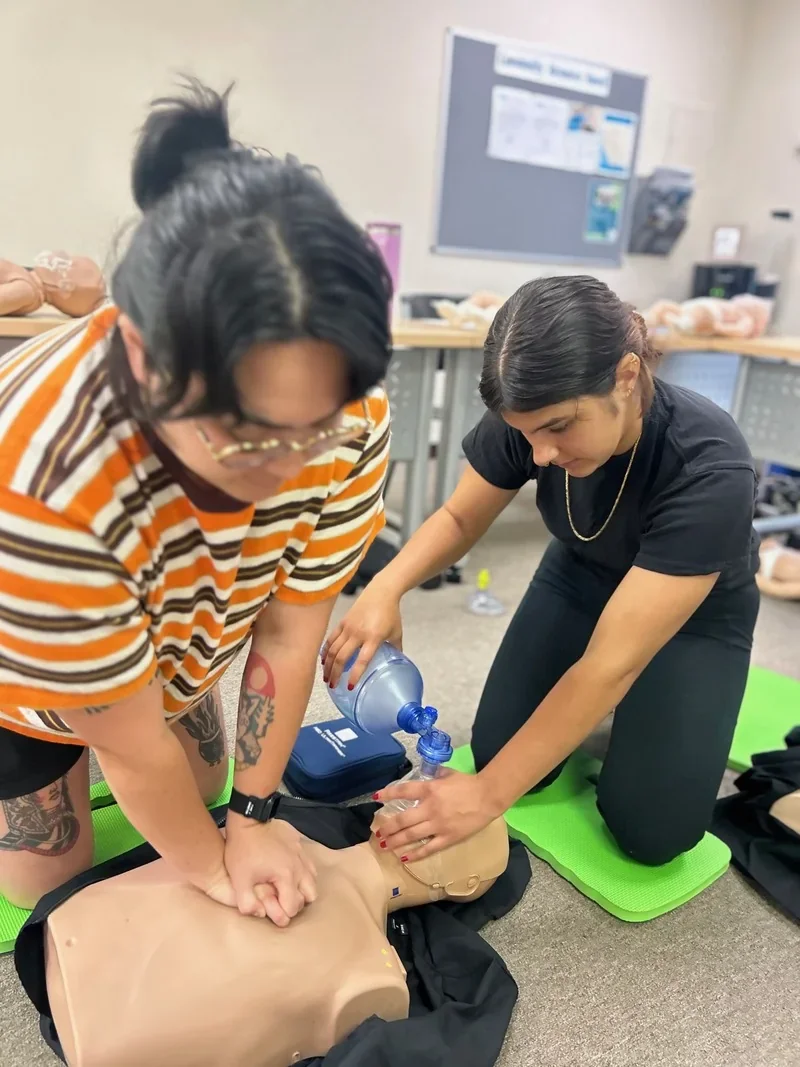
At the heart of the course is high-quality CPR, which includes chest compressions and ventilations. This isn’t just “pushing on the chest”; it’s about precision. We focus on the “chest compression fraction” — the proportion of time spent performing compressions during a cardiac arrest. The goal is to maximize this fraction by minimizing interruptions. Studies show that the more chest compressions that are performed during cardiac arrest, the higher the chance of survial.
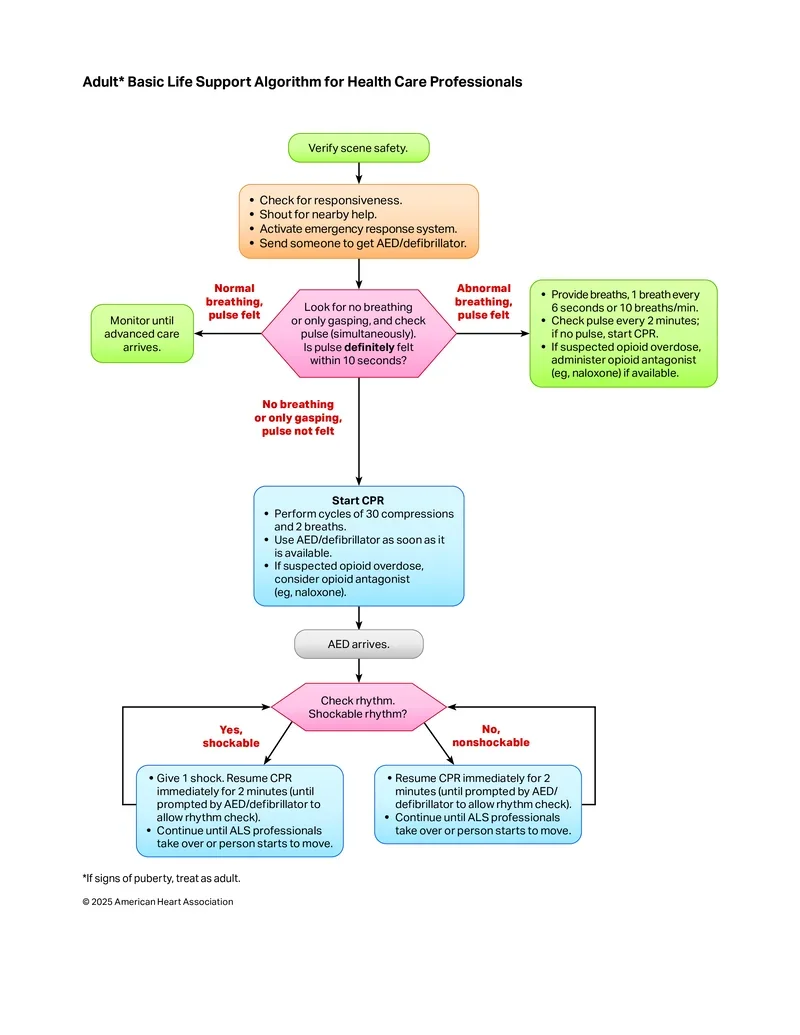
You will also learn the latest 2025 AHA Guidelines, which emphasize early AED (Automated External Defibrillator) use. Modern AEDs are highly automated, but knowing how to integrate them into a team rescue is a critical skill we practice repeatedly.
Our curriculum covers:
- BLS Algorithms: Step-by-step decision trees for adult, child, and infant rescues.
- Ventilation Techniques: Using bag-mask devices and pocket masks to deliver effective breaths without over-inflating the lungs.
- Opioid-Associated Emergencies: Recognizing the signs of an overdose and administering life-saving naloxone in conjunction with CPR.
- Team Dynamics: In a hospital or EMS setting, you rarely work alone. We teach you how to communicate clearly and switch roles seamlessly to prevent rescuer fatigue.
Core Skills Taught in BLS Certification Classes
The “basic” in Basic Life Support can be misleading. These are foundational skills, but they still demand accuracy and practice. In our BLS certification classes, we teach them in clear, step-by-step modules:
- Single-Rescuer CPR: What to do when you are the first on the scene.
- Multi-Rescuer Coordination: How to lead a team or follow a team leader during a code.
- Foreign-Body Airway Obstruction: Mastering the techniques for relieving choking in adults, children, and infants.
- Adult, Child, and Infant Rescue: Understanding the physiological differences — such as the 15:2 compression-to-ventilation ratio for two-rescuer pediatric CPR versus the 30:2 ratio for adults.
If you are looking for specific Basic Life Support (BLS) course options, we provide both full classroom experiences and flexible hybrid models.
BLS vs. Standard CPR Training
A common question we hear in Rohnert Park and Santa Rosa is: “Can’t I just take a regular CPR class?” For the general public, yes. But for healthcare providers, the answer is usually no.
BLS is the “Healthcare Provider” level of CPR. It involves higher-level clinical decision-making, such as performing pulse checks (which is no longer taught in layperson CPR) and using tools that healthcare providers typically have access to. While standard CPR focuses on single-rescuer CPR, BLS requires mastery of team-based resuscitation. If your professional license (RN, MD, DDS, EMT) requires you to maintain a CPR certifcation, the appropriate CPR class would be a BLS certificaiton class.
Choosing the Right BLS Training Format
In 2026, we know that healthcare professionals prefer to have training options that work with their schedules. That’s why we offer two distinct class formats for obtaining your BLS certificaton. Both class formats result in an American Heart Association (AHA) BLS Provider certification, and meet licensing, regulatory, and employer requirements.
| Feature | Instructor-Led BLS | Blended Learning (HeartCode BLS) |
|---|---|---|
| Best For | New students, those who prefer group interaction, and those who prefer traditional classroom learning | Busy professionals, those renewing their skills, and those who prefer self-paced online learning |
| Online Work | None | 1-2 hour adaptive online course |
| In-Person Time | \~3 hours | \~1 hour (Skills Session) |
| Instructor Interaction | The instructor leads students through each learning module and skills practice. Includes Q&A session. | Instructor provides a brief review and then focused coaching during skills practice. |
| Certification Issued | American Heart Association BLS Provider | American Heart Association BLS Provider |
For BLS Blended Learning, the AHA HeartCode BLS Online Course uses a personalized adaptive algorithm that adjusts to your existing knowledge. If you’re a seasoned paramedic, you might breeze through the online portion. If you’re a new nursing student, the system provides more depth where you need it. Once you finish the online part, you attend a BLS Skills Session to complete the hands-on skills check with our instructor.
The Importance Of Hands-On BLS Certification Classes
You cannot build real emergency response skills by only watching videos. Hands-on practice helps turn the right steps into muscle memory when seconds matter. In BLS certification classes, students practice on manikins that give real-time feedback on compression depth, rate, and overall CPR quality.
Our instructors, who are all professional first responders like EMTs, paramedics, and firefighters, provide real-time coaching. We don’t use voice-assisted manikins (VAM) because we believe human feedback is superior. We can see the subtle nuances in your hand placement or your posture that a machine might miss. This ensures that when you leave our BLS certification class, you have the skills and confidence to act when it counts.
Certification Requirements and Validity
Once you successfully complete the course, you receive your AHA BLS Provider certificaton (“eCard”). This digital certificate is the gold standard in the industry.
- Certificate Validity: Your BLS certification is valid for two years and expires at the end of the month in which it was issued.
- Acceptance: AHA BLS certification is widely accepted by hospitals, clinics, and many licensing boards across the Bay Area and nationwide.
- CE/CME Credits: Some professionals may be eligible for continuing education credit after completing our BLS Certification Class, but not all license types qualify. Check with your licensing board, and see more information about CE/CME credits here.
- Assessment: To pass, you must demonstrate proficiency in required adult and pediatric CPR skills. Students must also acheive a score of 84% or better on the written examination during an instructor-led BLS class. The Blended Learning BLS class does not have a written exam because testing is built into the HeartCode BLS Online Course.
Renewal and Recertification
Don’t let your credentials expire! An expired certification often means you cannot work until you recertify. We recommend enrolling in a BLS class at least a month before your expiration date.
When you enroll in a BLS certification class, you are being taught the most up-to-date 2025 AHA science and guidelines, ensuring your practice remains evidence-based.
Note on Scheduling: Students must enroll in advance to attend our classes. Because class sizes are limited and sessions can fill quickly, we recommend enrolling early to secure a date before your certification expires. Classes are available on weekdays, evenings, and weekends to fit a variety of schedules. We also keep instructor-to-student ratios low so each participant gets hands-on practice, real-time feedback, and high-quality training.
Frequently Asked Questions about BLS Certification Classes
Can I get BLS certification entirely online?
We get this question a lot: “I saw a website offering BLS for $15 online-only. Is that okay?” The answer is no. Major employers like Kaiser Permanente, Sutter Health, and St. Joseph Health require AHA-authorized training that includes a hands-on skills assessment. Online-only courses do not meet AHA and licensing requirements, and are most always rejected by employers. To get a valid AHA certificaton, an instructor must physically watch you perform CPR on a manikin.
Who is required to have BLS certification?
BLS is the standard for anyone who might encounter a cardiac emergency in a clinical or professional first-responder capacity. It is the required CPR certification class for anyone who works or intends to work in the healthcare field. This includes:
- Nurses (RN, LVN, CNA)
- Physicians and Physician Assistants
- EMTs and Paramedics
- Dental Professionals (Dentists, Dental Hygienists, RDAs)
- Physical and Occupational Therapists
- Respiratory Therapists
- Pharmacists
- Students in healthcare education programs
How long does a BLS course take?
A full, instructor-led classroom BLS course typically takes about 3 hours. If you choose the Blended Learning path, you’ll spend 1–2 hours on the online coursework at home, followed by about 1 hour in person for the Skills Session. We value your time, so we keep our classes moving efficiently while ensuring no one leaves without mastering the material.
Conclusion
At Vive CPR, we take our mission seriously because our instructors live it every day. When we aren’t in the classroom, we are out in the community serving as EMTs, paramedics, and firefighters. We bring that real-world experience into every one of our BLS certificaton classes.
Whether you are a medical student in Santa Rosa, a dental assistant in Rohnert Park, or a corporate safety team in Petaluma, we provide the highest quality AHA training in the North Bay. Our 5-star reputation is built on making these complex skills easy to understand and fun to learn.
Ready to get certified? We serve Sonoma, Napa, Marin, and the entire Greater Bay Area with flexible scheduling, including evenings and weekends. Don’t wait until your card is about to expire. Enroll in a BLS certification class today and gain the skills to save a life.
