

What Does ACLS Certification Actually Cost?
ACLS class price ranges vary widely — here’s a quick overview before we dive in:
| Format | Typical Price Range |
|---|---|
| Classroom (initial) | $170 – $290 |
| Classroom (renewal) | $160 – $250 |
| Blended learning (HeartCode online + Skills Session) | $243 – $398+ |
| AHA HeartCode online module only | $173 |
| Fully online (non-AHA) | $119 – $159 |
| ACLS Provider Manual (print) | $50.95 |
| ACLS Provider Manual (eBook) | $44.25 |
Note: Prices above reflect typical ranges as of April 2026. Your total cost depends on your provider, location, and what’s included.
If you work in emergency medicine, critical care, surgery, or any acute care setting, ACLS certification may be required. Physicians, nurses, paramedics, respiratory therapists, and many other clinicians are often required to hold a current Advanced Cardiovascular Life Support (ACLS) certification as a condition of employment or clinical privileges.
But here’s the problem: the price is rarely straightforward.
A quick search turns up figures anywhere from $119 to over $400. Some courses include materials, some don’t. Some are fully online, some require hands-on Skills Sessions. Some issue an official AHA eCard — others don’t. And if your certification lapses, the cost to get back into compliance can jump significantly.
This guide breaks down exactly what you’re paying for, how different formats and providers compare, and where you can save money without cutting corners on your training.
Understanding the ACLS Class Price: Formats and Fees
When you start looking for a class, the first thing you’ll notice is that the ACLS class price depends heavily on how the information is delivered. As of April 2026, the American Heart Association (AHA) continues to set the gold standard for resuscitation science, but training centers have some flexibility in how they package their services.
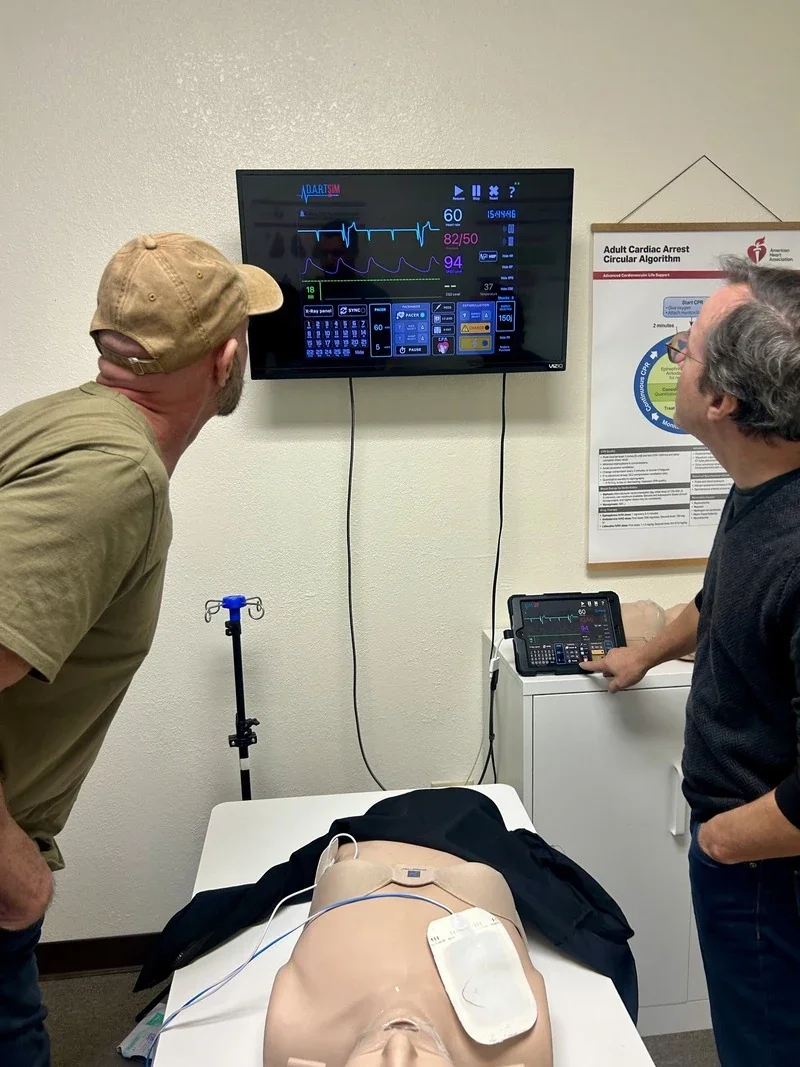
To understand the value of what you are paying for, it is helpful to compare the three main ways you can earn your certification. For a broader perspective on national averages, you can research how much does ACLS certification cost across different regions.
| Feature | In-Person, Instructor-Led Classroom | Blended Learning (HeartCode) | Fully Online (Non-AHA) |
|---|---|---|---|
| Average Cost | $170 – $290 | $243 – $398+ | $119 – $159 |
| Time Commitment | 6 – 15 hours | 3 – 6 hours online + 1 – 6 hour skills | 2 – 4 hours |
| Hands-on Skills | Yes, instructor-led | Yes, with instructor | No |
| AHA Approved | Yes | Yes | Rarely |
| Employer Acceptance | Universal | Universal | Limited |
At Vive CPR, we specialize in high-quality ACLS Certification that meets all AHA standards. We believe that saving a life requires more than just passing a multiple-choice test; it requires the muscle memory and confidence that only comes from hands-on practice with professional instructors who have real-life experience dealing with ACLS scenarios.
Factors Influencing the Blended Learning ACLS Class Price
Blended Learning, often referred to as HeartCode ACLS, is a popular choice for busy professionals in the San Francisco Bay Area. This format splits the course into two parts. First, you complete the HeartCode ACLS online module, which uses an adaptive learning algorithm. This technology assesses what you already know and lets you move quickly through familiar topics while spending more time on areas where you need a refresher. Then, you complete an in-person “Skills Session”, which is the hands-on portion of the training.
The price for this format is often “unbundled.” You might pay the AHA directly for the online portion, currently $173, and then pay a training center for the in-person Skills Session. Add those together, and the total ACLS class price for Blended Learning can be higher than a traditional classroom course. For many providers, though, the time savings and scheduling flexibility are worth the extra $50 to $100.
Fully Online vs. AHA Blended Learning ACLS Class Options
You will likely encounter “100% online” options that promise a card in minutes for under $150. While these are tempting, there is a catch. The AHA does not currently recognize any ACLS certification that does not include a hands-on skills verification.
Most hospitals in Sonoma County, Napa County, and Marin County require an official AHA Provider eCard. If you choose a fully online, non-AHA course, you might save $100 today only to find out your employer won’t accept the card, forcing you to pay for the correct course all over again. Always check with your HR department to ensure the course you choose meets their accreditation requirements.
Initial vs. Renewal: Comparing the ACLS Class Price
Is this your first time taking ACLS, or are you just keeping your skills current? The answer significantly impacts your ACLS class price.
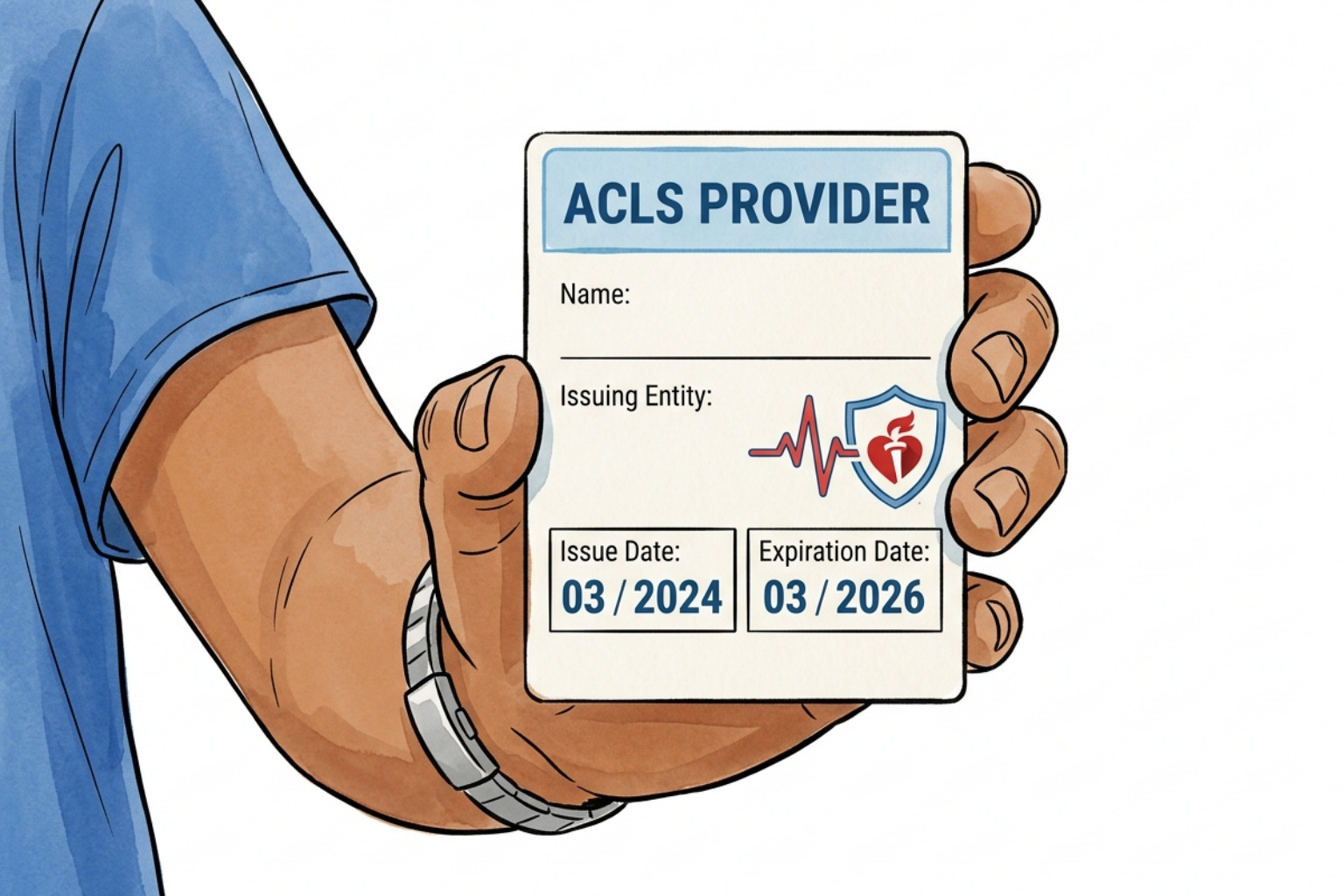
An ACLS certification is valid for two years. If you are an experienced provider with a card that hasn’t expired yet, you qualify for a renewal (or “update”) course. Many students ask about the lower cost of a renewal course when comparing the price difference between initial and renewal tracks. These are shorter—typically one day compared to the two-day initial course—and are priced accordingly.
Why the Renewal ACLS Class Price is Typically Lower
Renewal courses are cheaper because they assume you already have a strong foundation in ACLS algorithms. Instead of teaching every concept from scratch, the instructor focuses on updates to the 2025 guidelines and verifies your skills through algorithm review and scenarios.
Because the seat time is shorter (often 5–8 hours instead of 10–15), training centers can offer these classes for $30 to $80 less than a full provider course. However, you must present a valid, non-expired AHA ACLS card to qualify for this lower rate.
The Financial Risk of Expired Certifications
Waiting until the last minute to renew is a gamble that rarely pays off. In California, most training centers (including those in Santa Rosa and Rohnert Park) strictly follow AHA policy: if your card is expired by even one day, you are technically required to take the full initial provider course again.
Beyond the higher ACLS class price for the initial course, let’s look at the “hidden” costs of an expired card:
- Expedited Fees: If you need a card tomorrow to keep working, you may end up paying a premium for a private or expedited session.
- Lost Income: Many hospitals and public safety agencies will pull you from the schedule immediately if your certification lapses. Losing just one or two shifts as a nurse or paramedic will cost you far more than the price of the class itself.
- Legal Liability: Working in an acute care setting without a current certification can create significant legal and professional risks for you and your employer.
Hidden Expenses and Mandatory Materials
When budgeting for your certification, don’t just look at the tuition. There are several “line-item” costs that can sneak up on you.
Required Prerequisites and Prep Courses
To succeed in an ACLS class, you need to arrive prepared. The AHA requires all students taking a fully instructor-led course to complete the ACLS Pre-course Self-Assessment and achieve a score of at least 70%. If you struggle with rhythm recognition, you might need to invest in an ECG and Pharmacology prep course, which can add $60 to your total expenses.
Additionally, you may need to have a current Basic Life Support (BLS) Provider card. If yours is also expiring, you’ll need to enroll in Blended Learning ACLS and potentially add a BLS renewal to your session.
Travel and Opportunity Costs
For professionals in the North Bay or San Francisco, travel time is money. A “cheap” class two hours away might end up costing you more in gas, bridge tolls, and lost time than a slightly more expensive class in Rohnert Park.
Training centers also vary in their eCard fees. While the AHA charges providers about $12 per card, some centers include this in the tuition, while others add it as a “processing fee” at checkout. At Vive CPR, we believe in transparent pricing so you know exactly what you’re paying for before you walk through our doors.
Strategies to Reduce Your ACLS Certification Costs
While the ACLS class price is a necessary investment in your career, there are legitimate ways to keep the costs down.
Employer Reimbursement and Group Rates
Many healthcare facilities in the San Francisco Bay Area provide professional development funds or direct reimbursement for required certifications. Some hospitals even have “training pots” that cover up to $125 for initial certification and $85 for renewals. Always save your receipt!
If you work for a private clinic, dental office, or ambulance service, ask about group rates. We often provide onsite training for organizations, which can significantly lower the per-person cost and eliminate travel time for your staff.
Bundling ACLS with BLS or PALS
The most effective way to save money is to bundle your certifications. Since most healthcare providers need both BLS and ACLS, taking them at the same time is a smart financial move.
We offer Blended Learning BLS ACLS combo sessions that allow you to complete both Skill Sessions in a single visit. When you enroll in BLS ACLS Blended Learning, you may save money compared to booking the classes separately. The same applies to PALS; bundling advanced certifications is the best way to streamline your certification classes and protect your wallet.
Frequently Asked Questions about ACLS Pricing
What is included in the official AHA HeartCode ACLS price?
The $173 price paid to the AHA for the online module includes the adaptive learning course, the digital ACLS Provider Manual (eBook), and the online exam. It does not include the in-person Skills Session required for your eCard.
Are there additional fees for CE/CME credits?
For official AHA courses, continuing education credits are usually included in the price. ACLS typically offers 10.5 to 12 contact hours for the initial course and about 5 to 8 for the renewal. These are vital for maintaining your license as a nurse, physician, or EMS professional in California.
Why do prices vary so much between different training centers?
Training centers are independent businesses. Prices vary based on their rent (which is high in the Bay Area!), the experience level of their instructors, the quality of their equipment, and whether they include materials like the provider manual or eCard in the base price.
Conclusion
At Vive CPR, we understand that your time and money are valuable. As an AHA Authorized Training Center serving Rohnert Park, Santa Rosa, and the greater San Francisco Bay Area, we are committed to providing elite-level training that prepares you for real-world emergencies.
Our instructors are professional first responders and medical professionals who bring years of “street” and hospital experience to every class. We don’t use voice-assisted manikins or automated “RQI” systems because we believe the best way to learn is from a human expert who can answer your questions and refine your technique.
Whether you prefer a traditional classroom setting or the flexibility of Blended Learning ACLS, we offer a schedule that works for you, including evenings and weekends. Please note that we typically do not offer same-day or walk-in classes, as we keep our class sizes small to ensure every student gets the attention they deserve. However, please contact if you need help short notice and we will do our best to accommodate you.
Your ACLS class price is an investment in your ability to save a life. Let us help you make that investment count. Reach out to us today to find a class in Rohnert Park, or to schedule onsite training for your group.
