

What Is CPR Certification for Healthcare Providers?
CPR certification for healthcare providers is formal training that prepares medical professionals to respond to cardiac and breathing emergencies with high-quality, evidence-based care.
Here are the most common healthcare provider CPR certifications available as of April 2026:
| Certification | Who It’s For | Validity |
|---|---|---|
| BLS (Basic Life Support) | Nurses, EMTs, CNAs, MAs, dental staff, and most hands-on clinical roles | 2 years |
| ACLS (Advanced Cardiovascular Life Support) | Physicians, RNs, paramedics, respiratory therapists, and providers on emergency, critical care, or code-response teams | 2 years |
| PALS (Pediatric Advanced Life Support) | Healthcare providers who assess, treat, or stabilize infants and children in emergency or acute-care settings | 2 years |
| NRP (Neonatal Resuscitation Program) | Physicians, nurses, respiratory therapists, midwives, and delivery or NICU staff involved in newborn resuscitation at birth | 2 years |
All four require hands-on skills practice. BLS, ACLS, and PALS follow the latest American Heart Association (AHA) guidelines, while NRP certification is based on guidelines developed by the American Academy of Pediatrics (AAP) in collaboration with the American Heart Association (AHA).
Healthcare professionals aren’t just learning a skill – they have a duty to act. When cardiac arrest strikes, every minute without CPR and defibrillation lowers the chance of survival, which is why immediate response matters so much, according to the American Heart Association. With more than 500,000 cardiac arrests happening each year in the U.S., providers on the scene are often the first and best line of defense, as reflected in national data from the American Heart Association.
This guide covers several important topics: which certification you need, what’s covered, how training formats differ, and how to choose a reputable provider.
The Importance of CPR Certification for Healthcare Providers
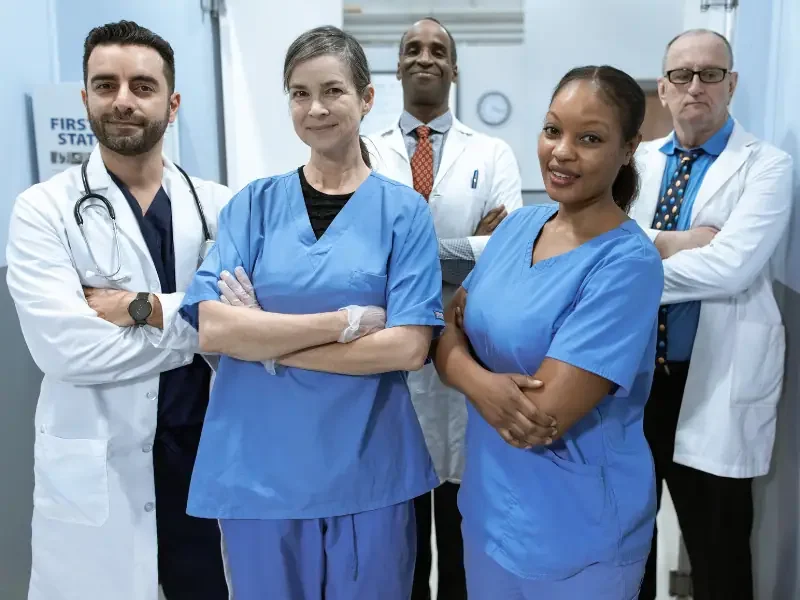
When it comes to life-saving care, CPR certification is far more than a hiring requirement – it is a core clinical skill. High-quality CPR delivered right away can double or even triple survival after cardiac arrest. For healthcare professionals who have a duty to respond, keeping a current BLS certification helps support faster action, better teamwork, and safer patient outcomes.
The numbers are hard to ignore: more than 500,000 cardiac arrests happen each year. In those moments, the Chain of Survival depends on the skill and readiness of the first responder. According to the American Heart Association, high-quality CPR is one of the biggest factors in better clinical outcomes. It is not just chest compressions. It also means the right depth, the right rate, full recoil, effective breaths, and fast defibrillation when needed.
For healthcare heroes across the SF Bay Area, this certification signifies that you are prepared to lead in a crisis. It bridges the gap between a patient’s heart stopping and the arrival of advanced life support.
BLS vs. ACLS and PALS: Which Level Do You Need?
Choosing the right course can feel like navigating an alphabet soup of acronyms. While almost every clinical professional needs BLS, many require advanced training to manage complex arrests.
| Requirement | BLS (Basic Life Support) | ACLS (Advanced Cardiovascular Life Support) | PALS (Pediatric Advanced Life Support) |
|---|---|---|---|
| Primary Focus | High-quality CPR, AED, choking | Cardiac arrest, stroke, ACS management | Pediatric respiratory and cardiac arrest |
| Skills Taught | 1 & 2 rescuer CPR, BVM use | Rhythm recognition, pharmacology, intubation | Pediatric assessment, vascular access |
| Team Dynamics | Basic team roles | High-performance team leadership | Pediatric team coordination |
| Target Audience | All healthcare staff | ER/ICU staff, MDs, Paramedics | Pediatricians, PICU/NICU nurses |
For those looking to advance their clinical toolkit, an ACLS certification moves beyond the basics to include ECG rhythm recognition and emergency pharmacology. If your work involves the smallest patients, a PALS certification is essential for mastering pediatric-specific resuscitation.
Advanced providers who use these skills daily may even look into ACLS for Experienced Providers, which focuses on complex differential diagnoses and critical thinking for toxicologic or metabolic emergencies.
Core Skills and 2025 AHA Guidelines
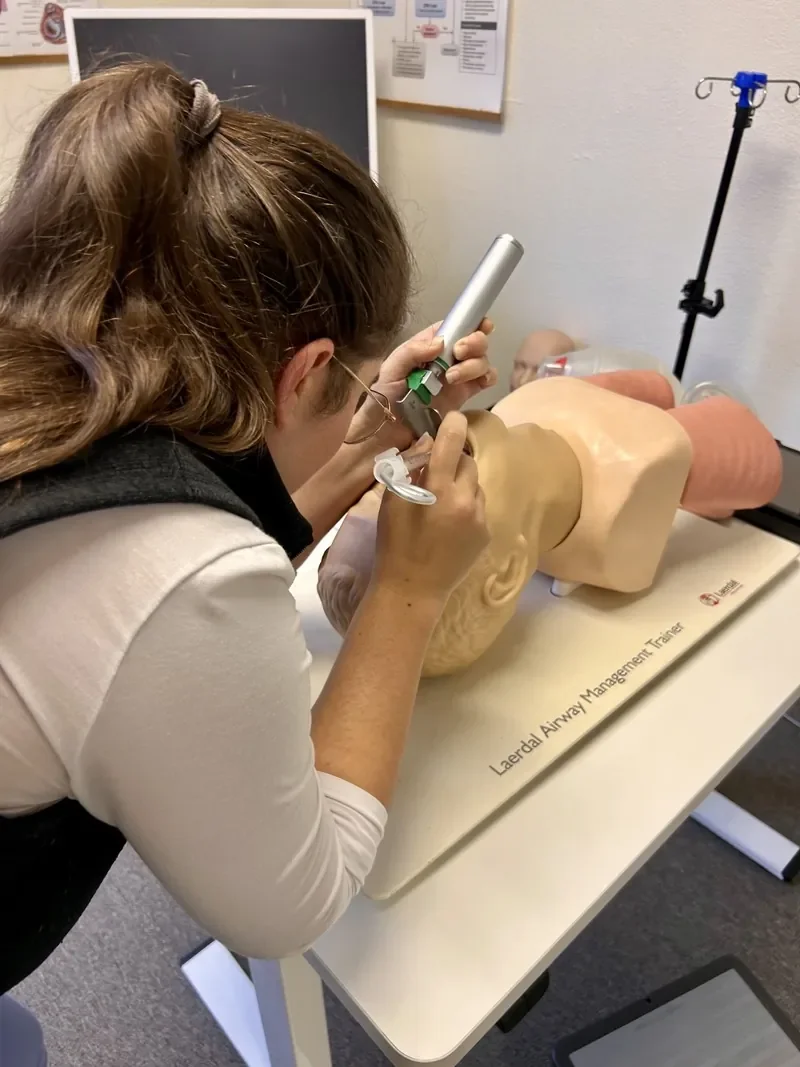
In April 2026, we follow the most recent science-based protocols. The AHA continues to emphasize the CAB (Compressions, Airway, Breathing) sequence for adults. This ensures that blood – and the oxygen it carries – keeps moving to the brain and heart as quickly as possible.
When you study the current AHA BLS Algorithms, you’ll see that the focus is on “high-performance” CPR. This means:
- Compression Depth: At least 2 inches for adults (but no more than 2.4).
- Compression Rate: 100 to 120 beats per minute.
- Full Recoil: Allowing the chest to return to its natural position so the heart can refill with blood.
- Minimal Interruptions: Keeping hands-off time to less than 10 seconds.
Core Skills in CPR Certification for Healthcare Providers
A comprehensive course doesn’t just cover one age group. You must be proficient in:
- Adult CPR: Using a 30:2 ratio (compressions to breaths) for single or two-rescuer scenarios.
- Child and Infant CPR: Recognizing the physiological differences and adjusting techniques, such as using the two-thumb-encircling hands technique for infants.
- AED Operation: Understanding that early defibrillation is the only way to “restart” a heart in many shockable rhythms.
- Bag Valve Mask (BVM): Mastering the E-C clamp technique to provide effective ventilations.
- Opioid-Associated Emergencies: With the rise in overdoses, identifying and treating opioid-induced respiratory arrest is now a core component of healthcare provider training.
For those specializing in younger populations, the current AHA PALS Algorithms provide the specific roadmaps needed for pediatric success.
Training Formats: Online, Blended, and In-Person
The way we learn has evolved, but the requirement for hands-on mastery remains absolute. While “online-only” certificates might be tempting for their low price tag, they often fail to meet regulatory, licensing, and hospital requirements because they lack hands-on skills practice and an instructor-verified skills check.
At Vive CPR, we offer two primary paths:
- In-Person Instructor-Led: The traditional “gold standard.” You spend the entire session in our Rohnert Park classroom with a professional first responder.
- Blended Learning: This is the best of both worlds. You complete the cognitive portion online, then come to us for a focused, hands-on Skills Session.
The online portion covers the “why” and the “how,” but the Skills Session is where you show you can perform the techniques correctly. This is especially important for Blended Learning ACLS, where team dynamics and equipment use are too complex for a screen alone.
Requirements for CPR Certification for Healthcare Providers
To earn your certification (“eCard”), you must complete all portions of the course:
- Instructor-Led Classes: These include an in-person class and a multiple-choice exam that you must pass. In some cases, a Pre-Course Self-Assessment is also required.
- Blended Learning Classes: You must finish both the online course and the in-person Skills Session.
- The Skills Session: This is a face-to-face evaluation with an instructor. You will get a brief review of the material, then practice hands-on skills in a realistic setting with guidance and feedback from a professional instructor. Students work through team-based emergency scenarios and deliver care according to BLS, ACLS, or PALS algorithms.
Whether you are completing a Blended Learning PALS course or an Instructor-Led BLS course, the in-person practice and verification of skills is what makes your certification legitimate in the eyes of employers and licensing boards.
Frequently Asked Questions
Navigating cpr certification for healthcare providers often leads to common questions regarding logistics and acceptance.
How long is CPR certification for healthcare providers valid, and when should you renew?
Your AHA certification is valid for two years and expires on the last day of the expiration month. Even so, CPR skills can start to fade within just a few months when they are not used regularly. That is why regular review of ACLS algorithms and other course materials is a smart habit.
If your card has already expired, you usually cannot take a renewal or update course and will need to complete the full provider course again. To stay ahead of the clock, you can enroll in a certification class a few weeks before your expiration date so there is no gap in your employment eligibility.
Are online-only certifications valid for hospital employment?
In short: usually not. Most hospitals and clinical facilities in Sonoma, Marin, and Napa Counties require an AHA or Red Cross certification that includes a live, hands-on skills component. OSHA specifically says online-only training does not meet workplace safety standards because an instructor cannot confirm the student’s physical skills. To be safe, choose a class that includes the required instructor-led, in-person skills verification, such as one of these certification classes.
What is the difference between BLS and Heartsaver?
This is a common point of confusion. Heartsaver is meant for lay responders, such as teachers, coaches, and office staff. It teaches basic CPR and AED use, but not the deeper clinical skills expected in patient care settings. BLS is designed for healthcare providers and typically covers team-based CPR, bag-valve-mask use, and pulse checks. If you work in a hospital or clinic, you will need to enroll in BLS, ACLS, and/or PALS as needed for your role, because a Heartsaver CPR class will not meet most employer or licensing requirements.
Conclusion: Choosing a Reputable Training Provider
When lives are on the line, where you train matters. Vive CPR is an AHA Training Site serving the North Bay, from Santa Rosa and Rohnert Park to San Francisco and beyond.
We don’t do things halfway. We don’t offer online-only or voice-assisted manikin training because we believe there is no substitute for an instructor-led, hands-on experience. Our instructors are professional first responders who bring years of street and hospital experience into the classroom.
We offer:
- Flexible Scheduling: Evenings, weekends, and same-week availability.
- Expedited Certification: Get your certification quickly so you can get back to work.
- Bilingual Training: Spanish-language classes are available to serve our diverse community.
- Onsite Training: We can bring the classroom to your workplace or school for group compliance.
Please note that we generally do not offer same-day classes or walk-in registrations. Our small class sizes ensure quality, and our classes often fill up, so we recommend booking in advance.
Ready to join the ranks of well-prepared healthcare providers in California? Enroll in a class today and build the skills you need to respond with confidence when every second counts.
