

Where to Find a CPR Certification Class Near Me
Looking for a cpr certification class near me? Here are the fastest ways to find one:
| Option | Best For | How to Find |
|---|---|---|
| AHA Training Site | Healthcare professionals, workplace requirements, recognized certification | https://vivecpr.com/classes or the AHA course catalog |
| Blended Learning | Those with busy schedules who need flexible scheduling, students who prefer online learning at their own pace | https://vivecpr.com/classes or the AHA course catalog |
| Onsite group training | Workplaces, schools, healthcare teams | Request onsite training |
| Community classes | Parents, caregivers, teachers, and the general public | Fire stations, hospitals, community organizations |
Every year, over 500,000 cardiac arrests happen across the United States. About 80% of them occur at home — not in hospitals or clinics. And a sobering 92% of victims never make it to the hospital alive.
The difference between life and death often comes down to one thing: whether someone nearby knows CPR.
CPR performed immediately can more than double a victim’s chance of survival. That’s not a small stat — that’s the difference between a person walking out of a hospital and a family planning a funeral.
Yet most people either don’t have CPR training, or their certification has quietly expired while life got busy.
Whether you’re a nurse renewing your credentials, a teacher meeting a school requirement, a parent wanting to protect your child, or an HR manager certifying your whole team — getting trained is one of the highest-impact things you can do in just a few hours.
This guide will help you find the right CPR class near you, understand your options, and get certified fast.
Why Finding a CPR Certification Class Near You is Critical
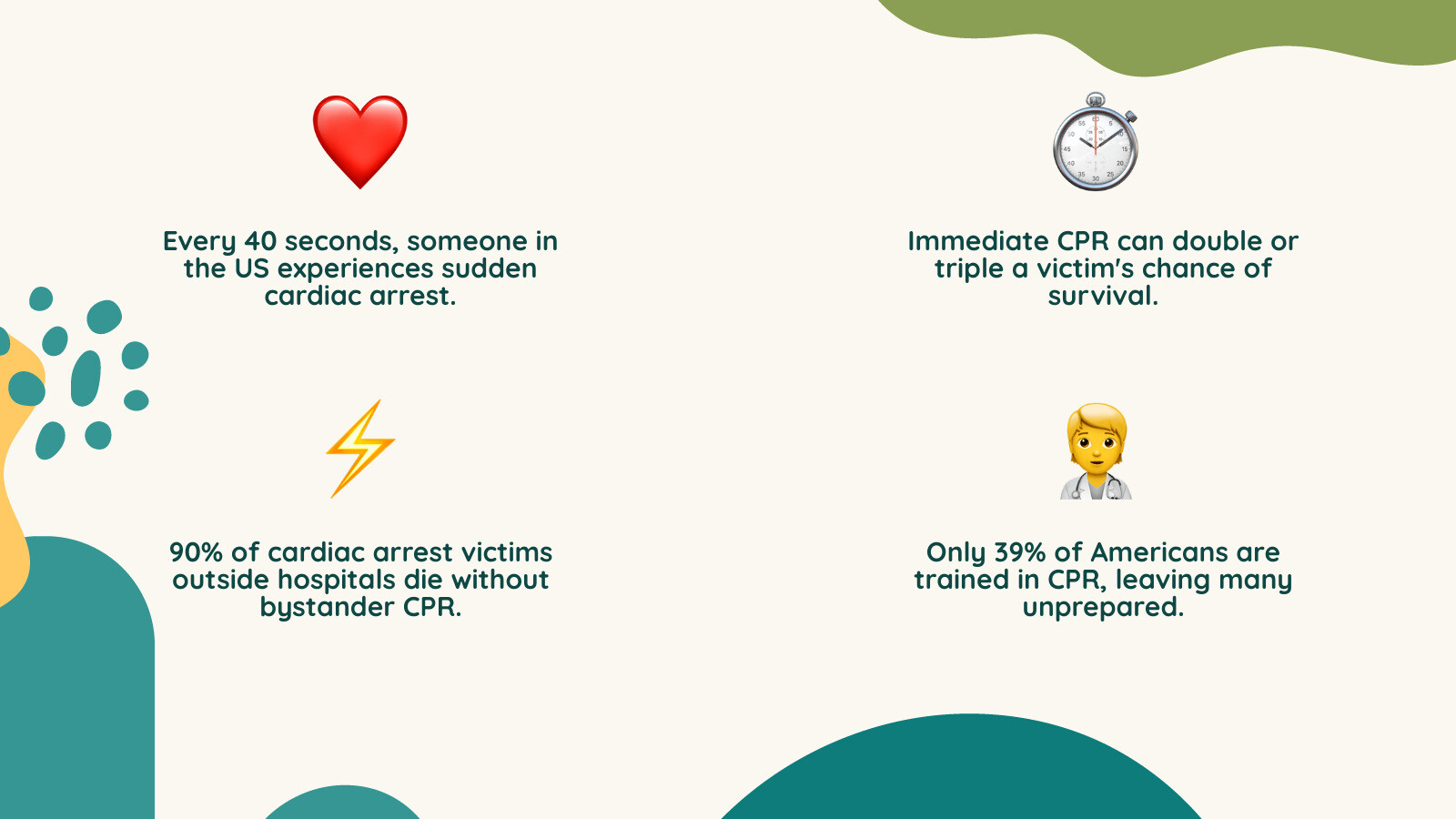
When we talk about cardiac arrest, we aren’t just talking about statistics; we are talking about our neighbors, friends, and family members. As of April 2026, the data remains clear: approximately 80 percent of heart attacks occur at home. This means the person most likely to need your help is someone you love.
Despite advancements in medical technology, 92 percent of victims die before getting to the hospital if no one intervenes. However, when a bystander starts high-quality chest compressions immediately, they can double or even triple a victim’s chance of survival. With over 500,000 cardiac arrests occurring annually, the need for immediate intervention is a public health priority.
By enrolling in a CPR certification class, you aren’t just checking a box for work; you are gaining the skills to keep blood flowing to the brain and vital organs until professional first responders arrive. Every minute that passes without CPR reduces the chance of survival by about 10%. In the time it takes for an ambulance to navigate traffic in the San Francisco Bay Area, those minutes are precious.
Finding a Reliable CPR Certification Class Near Me
Finding the right training center involves more than just a quick map search. You want to ensure the provider is authorized by a major organization like the American Heart Association (AHA). We recommend looking for centers that offer a variety of courses to fit specific needs, whether you are a medical professional or a local resident in Sonoma County.
Our classes overview helps you quickly compare nearby training options. When reviewing certification classes, look for programs taught by instructors with real emergency response experience. Vive CPR’s classes are led by first responders, including EMTs, paramedics, and firefighters, so students learn practical skills from experts who’ve performed these skills in real life.
How to Locate a CPR Certification Class Near Me Quickly
If you need your certification fast, you are not alone. Many people realize their certification has expired right before a job start date, school deadline, or license renewal. To find a class quickly, look for providers that offer Blended Learning. This lets you finish the course content online at your own pace, then attend a brief, focused Skills Session in person. Because Skills Sessions are shorter than full instructor-led classes, they are often offered more frequently, which can make scheduling much easier.
To learn more and enroll in our CPR Certification class, you can check current availability online. Our classes page often shows same-week openings for people in Rohnert Park, Santa Rosa, and nearby areas. We always issue AHA certifications on the same day that training is completed.
Group and Onsite CPR Certification Class Near Me
For businesses and organizations, scheduling CPR for a whole team offsite can be time-consuming and disruptive. That is why we offer Onsite CPR Training. We bring the manikins, AED trainers, and experienced instructors directly to your workplace, school, or job site, serving the SF Bay Area, particularly Sonoma, Marin, and Napa counties.
A CPR Certification Class or CPR First Aid Certification can help your team meet OSHA and workplace safety requirements while practicing the skills they may need on the job. Whether you run a dental office in Napa or a tech company in San Francisco, group training helps employees build confidence and respond more effectively as a team during an emergency.
Comparing Types of CPR and First Aid Training
Not all CPR classes are created equal. Choosing the wrong one can mean your employer won’t accept your card.
-
CPR or CPR First Aid: A practical option for the general public, workplace teams, teachers, coaches, and other non-clinical responders. It focuses on core lifesaving skills like CPR, AED use, choking relief, and, in CPR First Aid courses, basic first aid care.
-
BLS (Basic Life Support): The standard course for healthcare providers such as nurses, physicians, EMTs, dentists, and clinical staff. It covers high-quality CPR, team response, bag-mask ventilation, and other professional-level resuscitation skills.
-
Pediatric CPR First Aid: Designed for people who work in licensed childcare settings such as daycares and preschools. It focuses on infant and child CPR, choking response, and first aid skills commonly required for childcare compliance.
-
ACLS (Advanced Cardiovascular Life Support) and PALS (Pediatric Advanced Life Support): Advanced training for healthcare professionals who respond to serious cardiac, respiratory, and pediatric emergencies.
| Feature | BLS | CPR First Aid |
|---|---|---|
| Audience | Nurses, EMTs, doctors, and healthcare students | Teachers, coaches, parents, and the general public |
| Focus | Team-based response, high-quality CPR, bag-mask use | CPR, AED use, choking response, and basic first aid |
| Certification | AHA BLS Provider | AHA Heartsaver First Aid CPR AED |
| Required for | Clinical and healthcare settings | General workplace safety and community preparedness |
If you work in a medical setting, you will almost certainly need BLS Certification.
Blended Learning vs. In-Person Training
As we move through 2026, the “Blended Learning” model has become the most popular way to get certified. It combines the flexibility of online CPR certification with the essential requirement of hands-on skills practice.
You complete the interactive online portion first, which covers the science and theory. Then, you meet with one of our instructors for a Skills Session. This is where you practice chest compressions on a manikin and learn how to use an AED. For those who need both components, Blended Learning CPR First Aid certification is a good option. Remember: online-only certificates without a skills test are rarely accepted for OSHA or workplace requirements.
Specialized CPR First Aid Classes for Children and Infants
Licensed daycare and preschool staff need training that goes beyond adult CPR. Infants and children require different techniques, including age-specific hand placement, compression depth, and first aid response. Our Pediatric CPR First Aid Certification class is designed specifically for licensed childcare facilities and helps meet California EMSA training requirements.
If you are a new parent in Petaluma or a new grandparent in Novato, the Infant CPR for Parents class can help you feel more prepared for emergencies at home. It focuses on infant CPR and practical response skills parents often want most in that first year of life.
What to Expect During Your Certification Class
If it has been a few years since your last class, you will likely notice that modern training is far more hands-on and much less “death by PowerPoint.” When you enroll in a BLS class or CPR class with us, expect the following:
- Hands-on Practice: You will spend most of class actively practicing on high-quality adult and infant manikins, so you can build real, usable CPR skills.
- Manikin Feedback: Our manikins provide real-time feedback on compression depth, rate, and technique, helping you correct mistakes in the moment and develop stronger muscle memory.
- AED Operation: You will use an AED trainer to practice turning the device on, placing the pads, clearing the area, and delivering a shock safely.
- Choking Relief: We demonstrate and practice abdominal thrusts for adults, along with back slaps and chest thrusts for infants.
- Instructor Coaching: Instructors give individual feedback throughout class, coach you step by step, and answer questions as you practice so you leave feeling confident and prepared.
Frequently Asked Questions About CPR Training
How long does CPR certification last?
AHA certifications are valid for two years. However, research shows that CPR skills can begin to decline within just a few months of training. This is why regular practice and timely recertification are so important. If your card has expired, you should take a renewal course immediately to stay compliant and prepared.
Does online-only CPR meet OSHA requirements?
Generally, no. OSHA and most professional licensing boards (like the Board of Registered Nursing) require a hands-on skills demonstration in front of a certified instructor. While online coursework is a great way to learn the theory, you cannot “verify” physical competency through a computer screen. That’s why Blended learning can be the perfect middle ground if you prefer online learning, as it provides the online convenience with the necessary in-person verification.
How much do CPR classes typically cost?
Costs vary depending on the level of certification and the provider. In the San Francisco Bay Area, you can expect to pay anywhere from $60 to $125 for basic CPR or BLS. Advanced courses like ACLS or PALS are more expensive due to the complexity of the material. At Vive CPR, our pricing includes the cost of the AHA digital certificate and all training materials. We also offer group discounts for businesses and community organizations.
Conclusion
At Vive CPR, we believe everyone should feel ready to respond in an emergency. As an AHA Training Site, we proudly serve Santa Rosa, Rohnert Park, and the North Bay area. Our first responder instructors focus on clear, practical, high-quality training that helps you truly understand the concepts and build confidence, not just earn a certification card.
Whether you need a class in Marin, Napa, or Sonoma County, we offer the flexibility you need—including evenings, weekends, and bilingual (Spanish) options. Don’t wait until an emergency happens to realize you’ve forgotten your skills. Enroll in a CPR Certification Class today and join the ranks of those prepared to save a life.
External Resources:
